
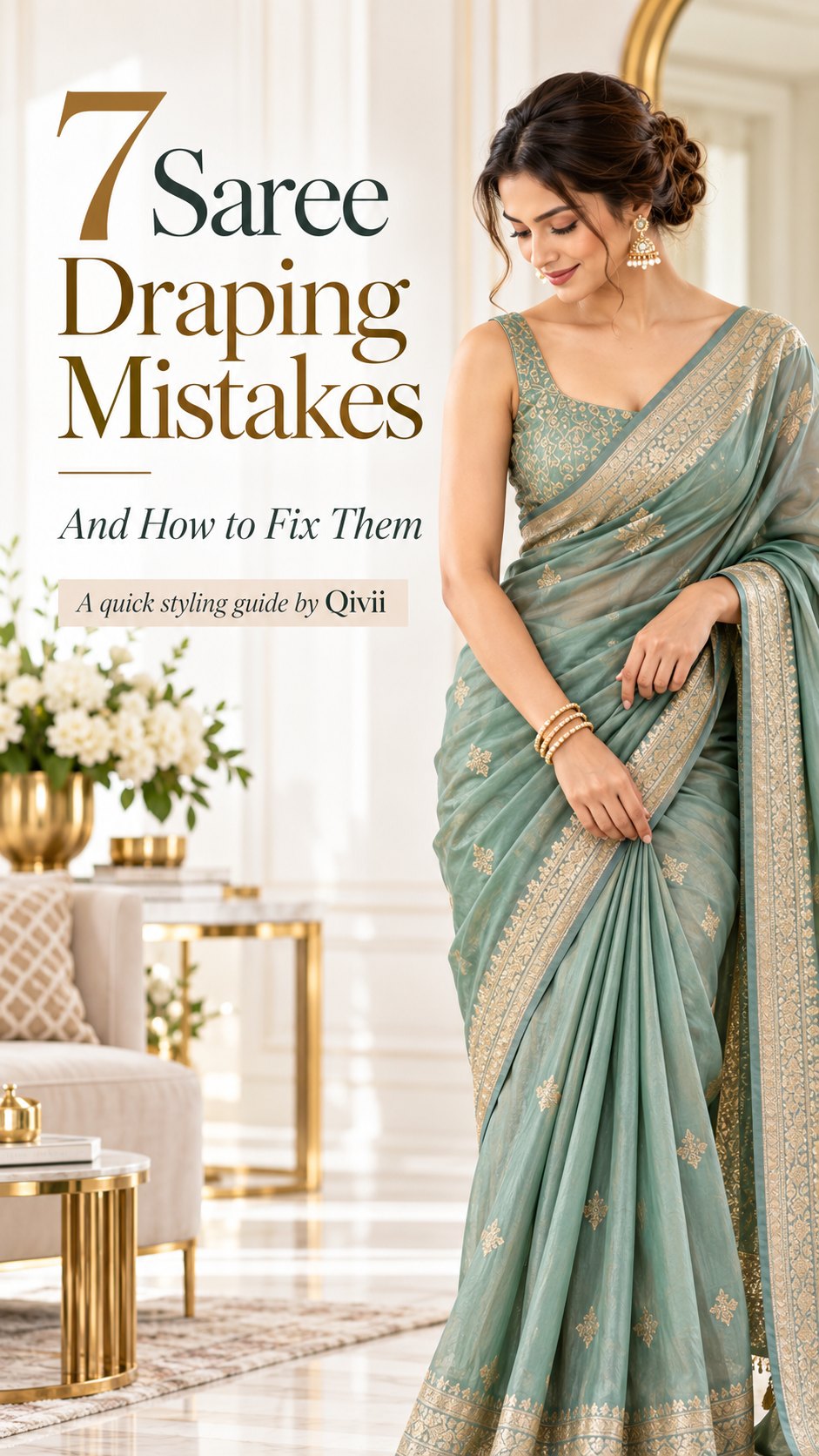
7 Saree Draping Mistakes That Ruin Your Look — And How to Fix Them
A beautiful saree deserves a drape that feels as comfortable as it looks. Whether you're getting ready for a wedding, a cultural celebration, or a formal dinner, a few small adjustments can transform your look. These seven common saree draping mistakes—and the simple ways to fix them—will help you dress with more confidence.
Quick tip: Always practice your complete look with your blouse, underlayer, and chosen footwear before the event.
1. Uneven Pleats

Uneven front pleats can make even a beautifully embroidered saree feel bulky or untidy. Instead of rushing through the folds, lay the fabric flat, create pleats of similar width, and smooth each one from the waist to the hem. Align the lower edges before tucking the pleats securely into your waistband.
How to fix it: For lightweight fabrics, use a few temporary clips while arranging the pleats, then remove them before wearing. A brief practice run before your event makes a noticeable difference.
2. The Wrong Saree Length

A saree that drags across the floor can catch underfoot, while one tucked too high may interrupt the graceful line of the outfit. Put on the exact shoes you plan to wear before adjusting your waist tuck and front pleats.
How to fix it: Stand naturally, take a few steps, and adjust until the hem skims just above the floor without getting trapped under your heels. Recheck the length if you switch from flats to heels.
3. A Pallu That Keeps Slipping

A loose pallu can shift every time you move, particularly when the material is silky or lightweight. Decide how much fabric you want across the shoulder, then arrange the pallu into tidy folds or leave it softly open to showcase embroidery.
How to fix it: Secure it discreetly with a suitable safety pin on the inside of the blouse, making sure the pin will not snag delicate fabric or sit against your skin. Test movement by lifting your arms and walking around.
4. An Uncomfortable Petticoat Fit

The petticoat or saree shapewear underneath your drape affects both comfort and the way the pleats fall. An overly loose waistband may shift, while one that is too tight can create unwanted bunching.
How to fix it: Choose an underlayer that sits comfortably at your natural draping waist and supports the tucked fabric. Check that you can sit, walk, and breathe freely before finishing your drape.
5. Using the Same Technique for Every Fabric

Not every saree handles pleats and volume in the same way. Structured silk tends to hold crisp folds; georgette creates softer, fluid lines; and organza has an airy character that benefits from carefully controlled volume.
How to fix it: For silk, smooth each pleat precisely. With georgette, avoid over-tightening the drape. With organza, experiment with wider folds and a simpler pallu to prevent excessive bulk. The best method is the one that works with your saree’s particular weave and weight.
6. A Blouse That Doesn't Fit Well

A blouse can look beautiful on its own but feel awkward once a pallu rests across the neckline and shoulder. Pulling at the armholes, gaping at the neckline, or tight sleeves can affect your posture and the finished drape.
How to fix it: Try your blouse with the actual saree, not separately. Check the shoulders, bust, sleeve opening, and back closure while moving naturally. Allow time for tailoring adjustments before a wedding or special occasion.
7. Too Many Competing Accessories

An ornate saree border, statement necklace, chandelier earrings, embellished handbag, and heavy bangles can all compete for attention. Rather than choosing every accessory as a centerpiece, let one element lead.
How to fix it: If the saree has detailed zari or embroidery, try elegant earrings and a simple bracelet. For a minimal saree, a stronger jewelry statement can provide contrast. Balance the neckline, pallu design, and occasion instead of following a rigid rule.
Your Final Saree Draping Checklist
- Front pleats are aligned and secure.
- The hem allows you to walk safely in your chosen shoes.
- The pallu stays in place as you move.
- Your underlayer supports the drape comfortably.
- The technique suits the saree fabric.
- Your blouse fits comfortably at the shoulders and bust.
- Your accessories complement, rather than compete with, the saree.
Explore Saree Styles at Qivii
Ready to put these ideas into practice? Explore Qivii's saree collection and discover a look that suits your next occasion. Complete the outfit with thoughtful accessories and a draping style that feels like you.
Styling note: Fabric weight, draping tradition, and personal preference can all change the best approach. Use these tips as a flexible guide, not a strict set of rules.

Leave a comment
This site is protected by hCaptcha and the hCaptcha Privacy Policy and Terms of Service apply.