
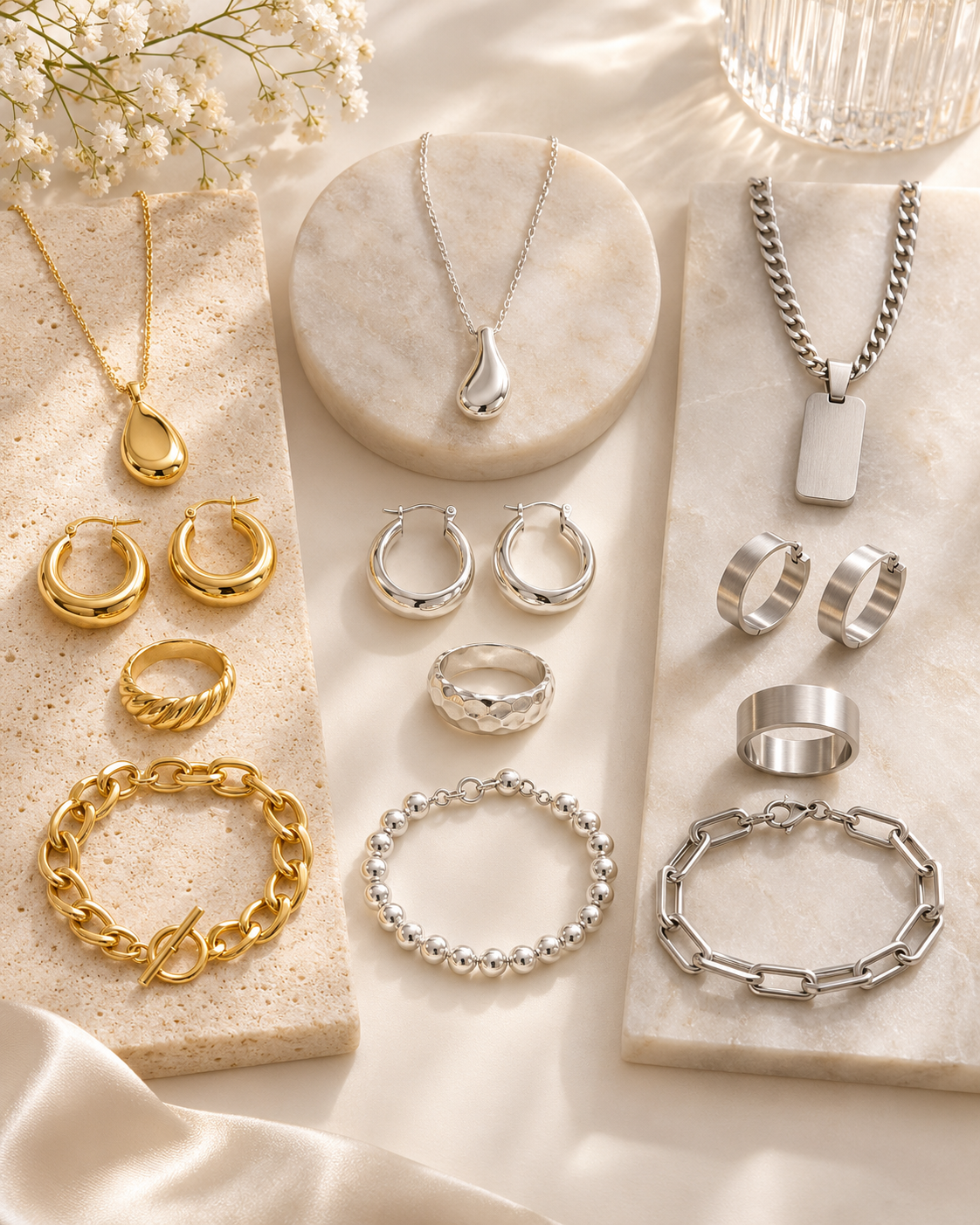
Gold-Plated vs Sterling Silver vs Stainless Steel Jewelry (2026): Which Material Is Best for Everyday Wear?
Choosing a jewelry material involves more than deciding between gold and silver colors. Durability, maintenance, composition and how frequently you wear a piece all influence the best choice. This 2026 guide compares three familiar materials so you can shop with clearer expectations.
Gold-plated vs sterling silver vs stainless steel: quick overview
Gold-plated: gold layered over a base metal; the coating can wear. Sterling silver: an alloy containing 92.5% silver that may tarnish. Stainless steel: corrosion-resistant alloys whose properties depend on their grade and finish.
What is gold-plated jewelry?
Gold-plated jewelry uses a layer of gold over a different base metal. The result has a warm gold appearance, but the layer can wear with time, moisture and friction. Plating thickness and base metal affect longevity. It works well for styling experiments and occasional accessories. Avoid exposure to perfumes, shower water and rough surfaces when possible.

What is 925 sterling silver?
Sterling silver contains 92.5% silver, usually combined with other metals for strength. A 925 mark refers to its silver content. Silver can tarnish through environmental exposure, but suitable cleaning and careful storage often restore its shine. Check whether a design has additional plating or delicate gemstones before polishing.

What is stainless steel jewelry?
Stainless steel is a family of corrosion-resistant alloys. It is popular for chains, bracelets and simple daily styles because it is often strong and relatively easy to maintain. Steel grades and finishes differ, so no single level of water resistance or skin compatibility applies to every piece. Some alloys contain nickel.

How should you clean and store jewelry?
Wipe your jewelry with a clean, soft cloth and keep pieces separated in a lined box or individual pouches. Remove jewelry before swimming, showering and exercise. Let perfume and lotion dry before putting it on. Avoid abrasive polishing on gold plating and follow care directions for pieces with pearls, coatings or glued stones.

Which material makes a better gift?
Start with the recipient's preferred color and how frequently they wear jewelry. Gold-toned accessories can complement occasion wear, sterling silver suits timeless designs and stainless steel offers streamlined contemporary styles. If the wearer has metal sensitivity, check the item’s exact composition instead of relying on a broad marketing label.

What is best for everyday wear?
For a gold finish, plating can be attractive but may require more careful handling. Sterling silver is a classic precious-metal option if regular polishing is acceptable. Stainless steel is generally practical for simple daily styles, although its grade and surface coating still matter. The construction of the clasp, setting and chain matters as much as metal labels.
Frequently asked questions
Is gold plated jewelry solid gold?
No. Only the applied surface layer is gold; the base is another metal.
Does sterling silver tarnish?
Yes. Tarnish is a common surface reaction and can often be treated with appropriate silver-care methods.
Is stainless steel always hypoallergenic?
No. Some steel alloys contain nickel. Anyone with a known allergy should check specific composition and suitable verified alternatives.
Can jewelry be worn in the shower?
Water, soap and cleaning chemicals may affect finishes, coatings and gemstones. Check item-specific care instructions; removing jewelry is usually the cautious choice.
Final thoughts
Choose gold plating for a warm appearance when you can protect its surface, sterling silver for a classic precious-metal option, or stainless steel for easygoing styles. Always verify the seller's description for the exact piece. Explore Qivii fashion and accessories collections for styling inspiration. Images in this guide are editorial illustrations and do not certify pictured items' metal composition.



Leave a comment
This site is protected by hCaptcha and the hCaptcha Privacy Policy and Terms of Service apply.