
Article: How to Measure Belt Size Correctly: Men’s & Women’s Belt Size Guide
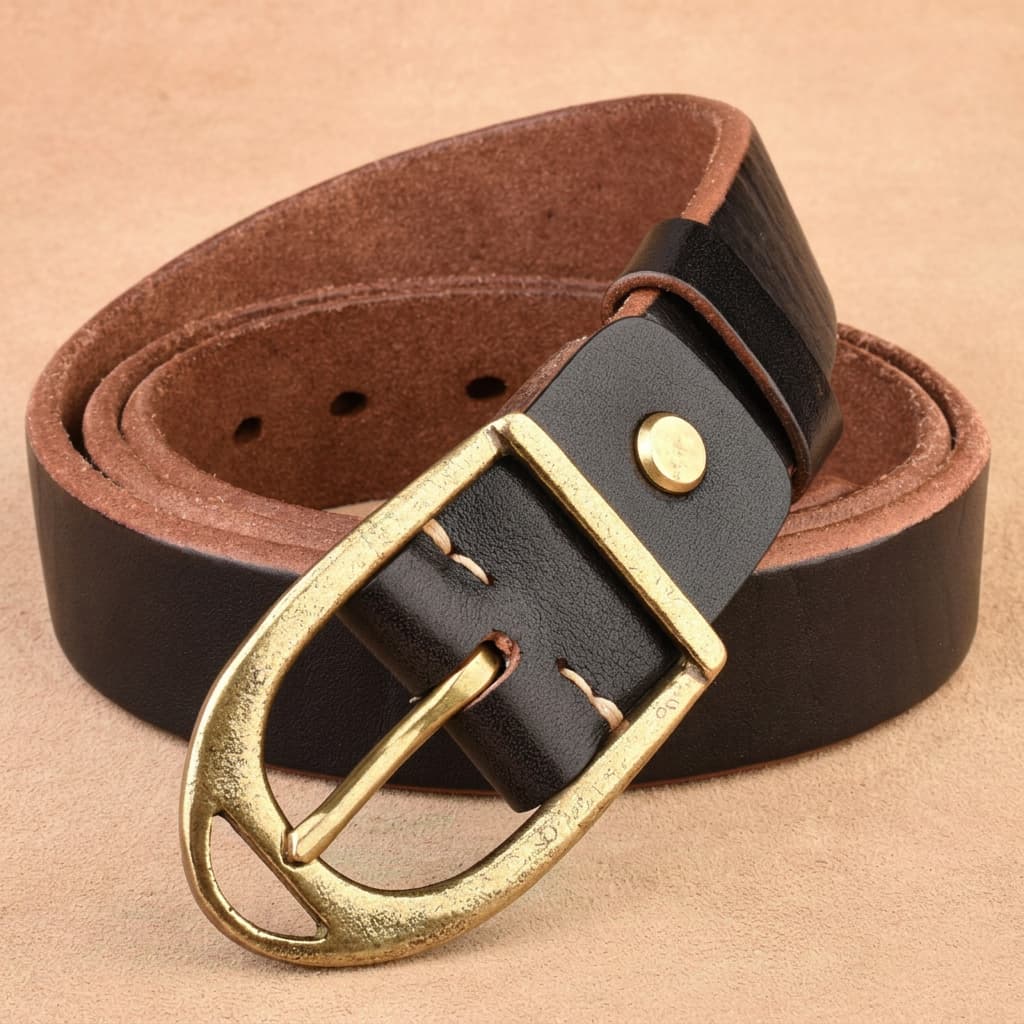
How to Measure Belt Size Correctly: Men’s & Women’s Belt Size Guide
Buying a belt online looks simple until you reach the size selector. Should you choose the same number as your trouser waist? Measure the entire belt? Include the buckle? And what if you want to wear a women’s belt at the waist with a dress instead of through jean loops?
This belt size guide explains the easiest ways to measure correctly before you order. Whether you are shopping for a classic men’s leather belt, a woven casual belt, or a women’s waist belt, the most reliable approach is to measure where and how you actually plan to wear it.
Why Belt Size Is Different From Trouser Size
Your trouser size and belt size are related, but they are not always identical. Trouser sizing can vary by brand, rise and fit, while a belt has to travel around your clothing and fasten comfortably. That is why using an actual body or belt measurement is more dependable than guessing from the label inside your jeans.
A correctly sized belt should normally fasten near the middle hole, leaving enough adjustment on either side for small changes in clothing thickness or fit.

Method 1: Measure a Belt You Already Own
If you have a belt that already fits well, this is usually the easiest method.
- Lay the belt flat on a table without stretching it.
- Find the point where the buckle pin meets the buckle or where the strap begins to fasten.
- Measure from that point to the hole you use most often.
- Use that measurement as your target belt size.
Do not measure from the very end of the buckle to the end of the strap. Total belt length is not the same thing as wearable belt size, and buckle designs can add different amounts of extra length.
Method 2: Measure Your Body Where the Belt Will Sit
If you do not own a well-fitting belt, use a flexible tape measure.
For a men’s belt worn with trousers or jeans, thread the tape through the belt loops while wearing the type of trousers you normally plan to pair with the belt. Keep the tape comfortably snug, not tight. Record the number where the tape meets.
For a women’s fashion belt, measure the exact position where you plan to wear it. A belt worn at the natural waist over a dress will require a different measurement from a belt worn lower on the hips with jeans.
Important: measure over the clothing if that is how you will actually wear the belt. A thick dress, cardigan or coat can change the required length.

Where Should a Properly Sized Belt Fasten?
For a traditional belt with several holes, the ideal fit is usually around the center hole. This creates a balanced look and gives you room to tighten or loosen the belt when needed.
If the belt only closes on the first hole, it may be too small. If you consistently use the final hole and have a very long tail, it may be too large. Adjustable or track-style belts can be more forgiving because they provide smaller increments of adjustment.
Men’s Belt Size: A Simple Starting Rule
A common starting point is to choose a belt approximately 2 inches larger than your labelled trouser waist. For example, someone who consistently wears a 34-inch waist may begin by checking belts around size 36.
However, this is only a shortcut—not a universal rule. Vanity sizing, trouser rise and the thickness of the waistband can all affect fit. When the product provides an actual belt measurement or size chart, use your measured waist or existing belt measurement instead.
Qivii’s Men’s Belts collection includes classic leather, woven and casual options with different size systems, so always check the individual product variants before choosing.

Women’s Belt Size: Waist vs Hip Placement
Women’s belts are often styled in more positions than standard trouser belts, so placement matters even more.
For dresses and high-waisted outfits
Measure around the narrowest part of your waist or the exact point where you want the belt to cinch the garment. Measure over the dress, blouse or knitwear if the belt will sit on top.
For jeans and trousers
Measure through the belt loops while wearing the jeans or trousers. This is often lower than the natural waist, so the measurement can be several inches larger.
For low-rise or hip belts
Measure around the hip area where the belt will sit. Do not use your natural-waist measurement for a belt intended to be worn lower.
Explore Women’s Belts when comparing waist belts, western styles and decorative options.
Belt Size Conversion Example
| Measured area | Example measurement | What to check |
|---|---|---|
| Men’s trouser waist | 34 in | Start near 36 in if using the +2 rule, then verify product chart |
| Women’s natural waist | 29 in | Choose a belt whose usable adjustment range includes 29 in |
| Women’s hip placement | 36 in | Use 36 in as the target—not the smaller waist measurement |
| Existing belt | 38 in to favorite hole | Look for a comparable wearable belt measurement |
These examples are for understanding the method rather than replacing a product-specific chart. When exact manufacturer sizing is available, compare your measurement to that chart.
How Belt Width Changes the Look
Length determines whether the belt fits, but width determines whether it works with your outfit and belt loops.
- Narrow belts: easy for dresses, refined trousers and subtle waist definition.
- Medium-width belts: versatile for everyday jeans, chinos and casual trousers.
- Wide statement belts: useful over dresses, blazers or oversized layers, but may not fit standard belt loops.
If you are buying a belt primarily for jeans or trousers, check the loop width as well as the belt length.
Leather, Woven and Stretch Belts Fit Differently
A structured leather belt generally has a fixed hole range. A woven or stretch belt can offer more flexibility because the material or construction allows finer adjustment.
For example, Qivii’s Nantucket Woven Belt offers a more casual woven construction, while the Ashford Leather Belt provides the cleaner structure of a traditional leather style.
If you prefer broad size ranges, the Newport Canvas Belt is offered in grouped size ranges, making it especially important to compare your measurement with the selected variant.

5 Common Belt Sizing Mistakes
- Measuring the entire belt end to end. This includes strap length that is not part of the actual fitted circumference.
- Including the full buckle length. Buckles vary in size, which can distort the measurement.
- Using only trouser size. Trouser labels are useful as a starting point but are not as accurate as measuring.
- Measuring the natural waist for every women’s belt. A hip belt or jeans belt sits lower and needs more length.
- Ignoring clothing thickness. A belt worn over a dress, sweater or coat needs to accommodate that extra layer.
How Much Belt Tail Should Be Left After Buckling?
There should generally be enough tail to pass comfortably through the first keeper or belt loop without extending excessively around the body. The exact amount depends on the belt style. Fashion belts may intentionally have longer tails, while classic leather belts usually look cleaner with a moderate amount of strap beyond the buckle.
The more important sign is where the belt closes. If you are fastening near the middle of the adjustment range, the overall proportion is usually right.
What If You Are Between Two Belt Sizes?
First check the product’s adjustment range. If your measurement sits near the upper limit of the smaller size, the larger size may give you more flexibility, particularly if you plan to wear the belt over thicker clothing.
For structured formal belts, avoid choosing dramatically larger just for extra room because the remaining strap can look too long. For woven, stretch or track belts, sizing can be more forgiving.
Quick Belt Measurement Checklist
- Decide exactly where you will wear the belt.
- Wear the clothing you expect to pair with it.
- Measure comfortably—never pull the tape tight.
- If using an old belt, measure from the buckle fastening point to your favorite hole.
- Compare the number with the individual product size chart or variant range.
- Check belt width if you plan to use trouser loops.
- Aim to fasten around the middle of the available adjustment range.
Frequently Asked Questions
Is belt size the same as waist size?
Not always. Belt sizing can include extra allowance for clothing and the belt’s fastening system. Measuring where the belt will actually sit is more reliable.
Should I buy a belt 2 inches bigger than my pants?
For many traditional men’s belts, adding about 2 inches to the trouser waist is a useful starting rule. It should still be verified against the specific product’s sizing information.
How do I measure a women’s waist belt for a dress?
Put on the dress, wrap a flexible tape around the point where you want the belt to sit, and record the comfortable circumference. Use that number to select a belt whose adjustment range includes your measurement.
How do I measure an existing belt?
Lay it flat and measure from the buckle’s fastening point to the hole you normally use. Do not measure the complete strap from end to end.
What is the best belt size if I am between sizes?
Consider the product’s adjustment range and how you intend to wear it. If the smaller size would leave you at its final hole, the next size may provide a better range of adjustment.
Final Takeaway
The best belt size is the one based on the place you will actually wear the belt—not simply the number printed inside your trousers. Measure a belt that already fits or measure your body over the intended clothing, then compare that result with the product’s size options.
Once you know your measurement, explore Qivii’s Men’s Belts and Women’s Belts to choose a style that fits both your wardrobe and your preferred placement.


Leave a comment
This site is protected by hCaptcha and the hCaptcha Privacy Policy and Terms of Service apply.