
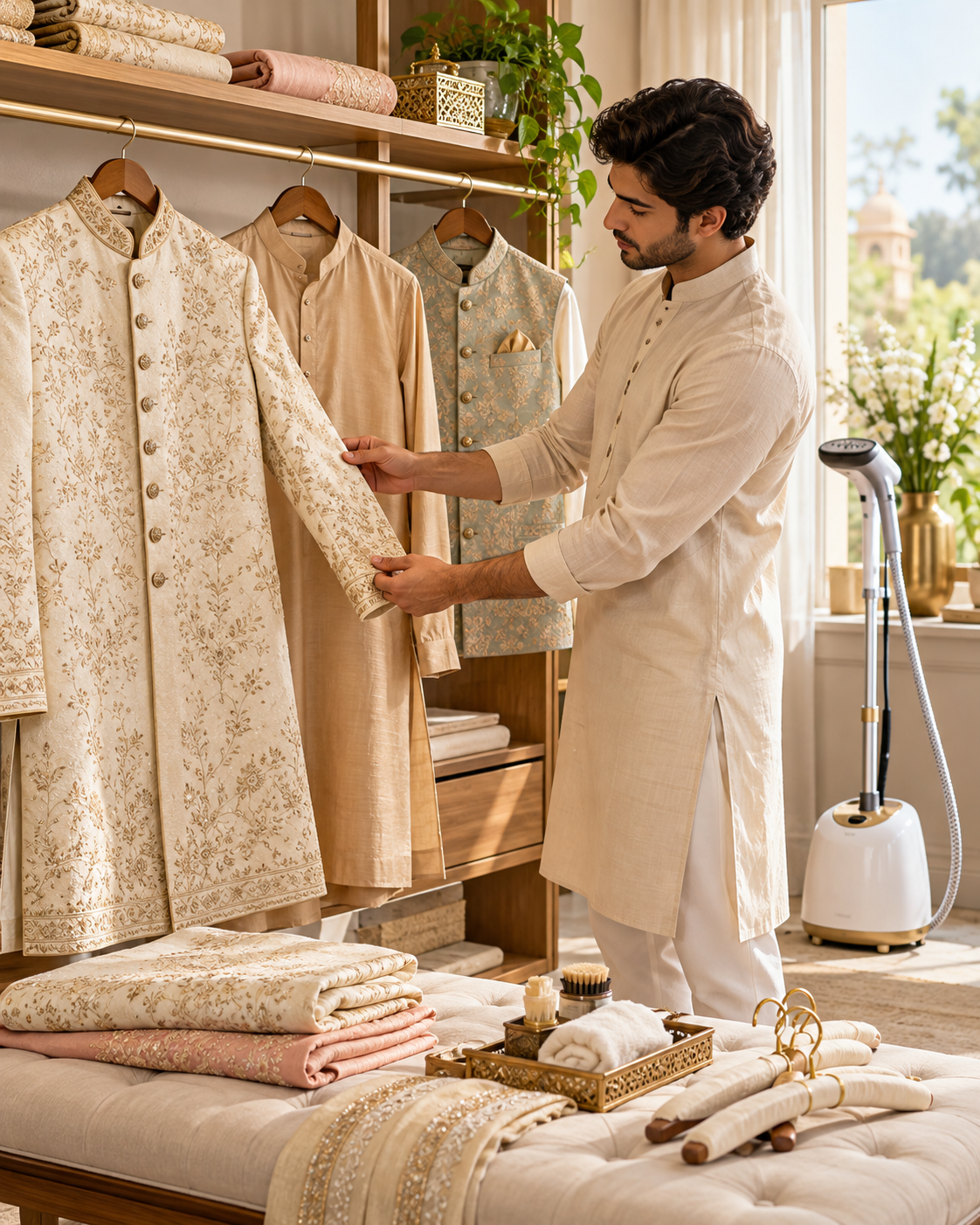
How to Wash, Store & Care for Men's Kurta, Sherwani & Nehru Jackets: Complete Care Guide 2026
Whether it is a comfortable cotton kurta you wear repeatedly or an intricately embroidered sherwani reserved for wedding celebrations, good care begins with one rule: always follow the sewn-in garment care label first. Fabric blends, linings, dyes, embellishments and tailoring can require very different methods—even when two outfits look similar.
This 2026 men's ethnic wear care guide explains how to wash eligible kurtas, handle silk and art-silk sherwanis, protect zari and sequins, maintain the shape of Nehru jackets, and store occasion wear between celebrations.
1. How to Wash a Cotton Kurta Without Damaging It

Check the label before washing. Some plain cotton kurtas can be hand-washed or machine-washed on a gentle cycle, but embroidered, lined, dyed or blended garments may require specialist cleaning instead.
- Read the care symbols and test a hidden area for color transfer if appropriate.
- Where hand-washing is allowed, use cool water and a mild detergent suitable for the fabric.
- Gently move the kurta through water; avoid aggressive scrubbing, twisting or wringing.
- Rinse thoroughly and press out moisture with a clean towel instead of twisting.
- Dry according to the label, typically away from strong direct sunlight to help reduce fading.
Never assume that all cotton kurtas are machine washable. Colorfastness, fabric finishing, embellishment and lining matter just as much as fiber content.
2. Caring for Silk and Art-Silk Sherwanis

Silk, art silk, jacquard and richly decorated sherwanis may include bonded layers, structured shoulders, delicate trims or metallic embroidery. Water and rubbing can damage finishes, distort structure or cause colors to bleed.
- Check the cleaning label. If it says dry clean only, use a cleaner experienced with embellished occasion wear.
- Do not immerse a structured sherwani in water unless its specific care instructions allow it.
- After wearing, inspect the collar, cuffs and hem for marks and loose threads.
- Let the garment air in a clean, shaded location before storing, but do not leave it exposed for prolonged periods.
- Discuss delicate buttons, stones, metallic threads and trims with the cleaner before treatment.
3. Protecting Zari, Sequins, Beading and Embroidery

Embellishments can snag on jewelry, hooks, rough surfaces and one another. Rather than brushing or rubbing embroidered areas, handle them gently with clean, dry hands and support heavily decorated panels when lifting.
For storage, place clean, unbuffered acid-free tissue where appropriate between embellished folds to minimize abrasion. Avoid adhesive tape directly on fabric, DIY bleaching or harsh stain-removal chemicals. Loose beads, sequins or zari threads are best repaired by a qualified specialist before they unravel further.
4. Nehru Jacket Care: Steaming, Pressing and Keeping the Shape

Nehru jackets and bandhgala-style layers depend on structured collars, chest panels and crisp seams. Heat or moisture applied incorrectly can produce shine, water spots, stretched fabric or damaged interfacing.
- Confirm whether steaming or ironing is allowed by the manufacturer's instructions.
- If permitted, start with a low, fabric-appropriate setting and test a hidden section.
- Keep a suitable distance between a steamer and delicate material; never force steam into trims or glued structures.
- For ironing where allowed, use a clean pressing cloth and avoid pressing directly over embroidery or decorative buttons.
- Let the jacket cool and dry completely on a correctly shaped hanger before putting it away.
5. Stains and Odors After Weddings and Festivities
Food, perfume, makeup and perspiration can cause lasting marks if ignored. Blot a fresh spill gently using a clean absorbent cloth; do not rub it deeper into the fabric. Avoid combining stain removers, using bleach, or spraying fragrance directly onto delicate garments. For silk, metallic embroidery, unknown dyes or expensive formalwear, consult a specialist promptly and explain what caused the stain.
Always make sure a cleaned garment is completely dry before storage. Trapped moisture can encourage odor or mildew.
6. How to Store Sherwanis, Kurtas and Wedding Outfits

Choose a clean, dry, stable and preferably dark storage area. For structured garments that can safely hang, use broad padded hangers to distribute weight across the shoulders. Particularly heavy embroidery may need careful, supported flat storage to prevent stretching.
- Use breathable, clean garment covers rather than sealing delicate outfits in plastic for long periods.
- Do not cram outfits together or let embroidered surfaces rub against rough zippers.
- Fold flat-stored pieces loosely, using suitable acid-free tissue to support folds where needed.
- Store stoles, turbans and removable ornaments separately in labeled protective bags or boxes.
- Inspect stored outfits periodically for moisture, insects, discoloration and stress around shoulders or seams.
7. Common Men's Ethnic Wear Care Mistakes
- Washing a garment without checking its care label
- Using excessive heat on silk, art silk, jacquard or synthetic blends
- Scrubbing embroidered areas or pulling loose threads
- Storing damp outfits or using airtight plastic bags for prolonged storage
- Hanging unusually heavy decorated garments without adequate support
- Applying perfume or harsh stain removers directly to the fabric
Frequently Asked Questions
Can I wash my sherwani at home?
Only if the specific care label explicitly permits home washing. Structured or heavily embellished sherwanis often need specialist assessment and cleaning.
Can a cotton kurta be washed in a washing machine?
Some can, but not all. Follow its label, consider a gentle cycle only when permitted, and account for prints, linings and embroidery.
How do I remove wrinkles from a Nehru jacket?
Use only the heat or steam method approved by the care label. If the jacket contains special interlinings or heavy decoration, professional pressing may be safer.
How should I store wedding sherwanis for months?
Clean and dry them as directed, select appropriate hanging or flat support, protect embellishments, use breathable storage materials and keep them in a stable dry environment.
What should I do if zari or sequins become loose?
Avoid pulling the thread or cutting away attached decoration. Keep the area protected and ask an experienced garment repair professional to secure it.
Explore Men's Traditional Wear at Qivii
Looking for your next occasion-ready outfit? Browse men's kurta sets, men's sherwanis and men's Nehru jackets. Check each individual product's material information, fit details and care instructions before choosing.
Care advice is general and cannot replace garment-specific labels or professional conservator/cleaner recommendations. Editorial images illustrate care concepts and are not substitutes for manufacturer-approved instructions.


Leave a comment
This site is protected by hCaptcha and the hCaptcha Privacy Policy and Terms of Service apply.