
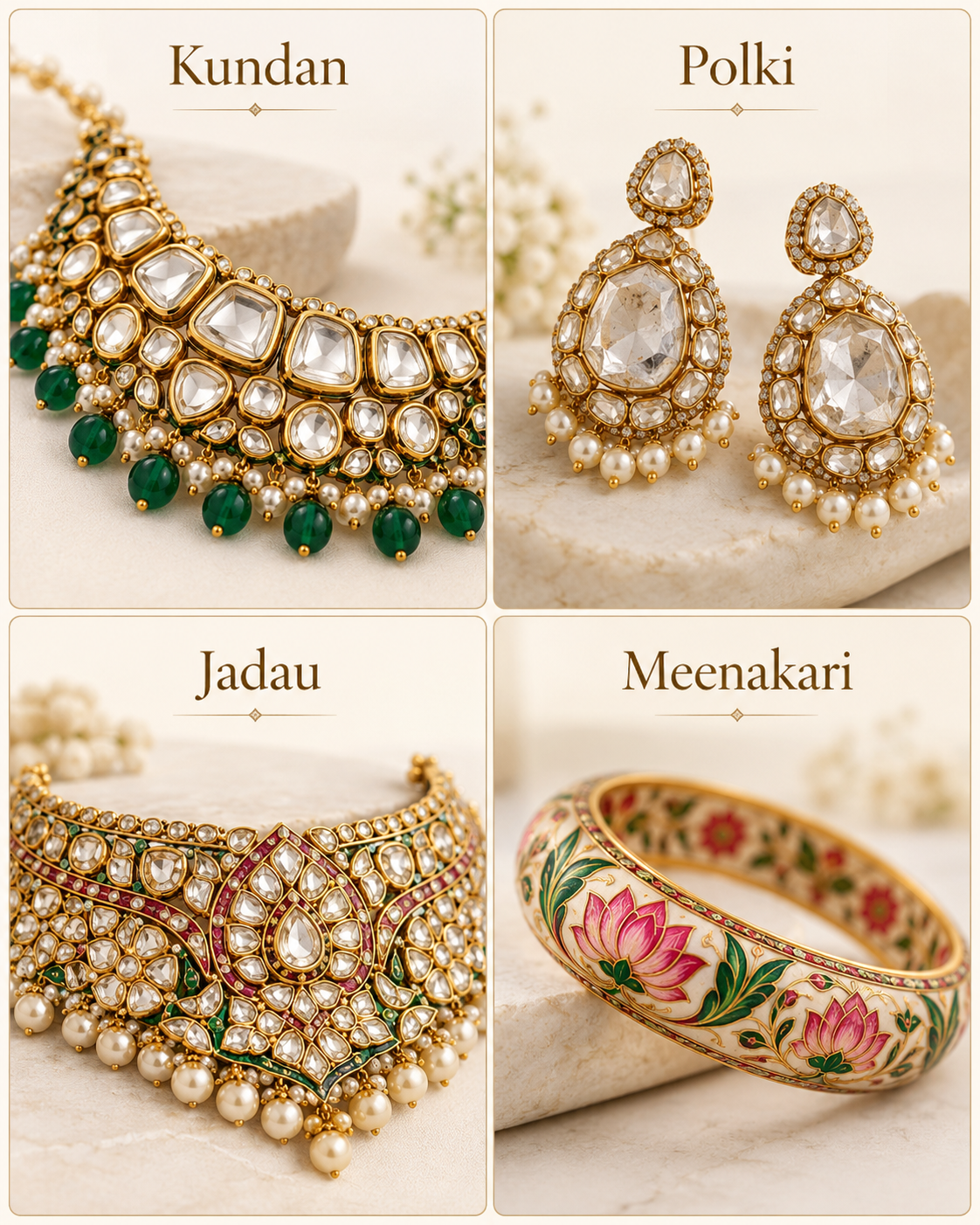
Kundan, Polki, Jadau & Meenakari Jewellery Explained: A Beginner’s Guide (2026)
Kundan, Polki, Jadau and Meenakari are among the most recognizable names in traditional Indian jewellery. But these words do not describe four completely separate kinds of jewellery. Some refer to a setting technique, some to the stone itself, and others to decorative craftsmanship. Knowing the difference helps you appreciate the artistry and understand what you are actually buying.
Whether you are discovering Indian wedding jewellery for the first time or browsing festive accessories for Diwali, this beginner-friendly guide explains the terminology, materials and questions to ask before choosing a piece.
At a glance: what do the four names mean?

- Kundan: Traditionally a style of setting stones using highly refined gold, often discussed in connection with gemstone-set Indian jewellery.
- Polki: Uncut or minimally cut natural diamonds used in jewellery. 'Polki-style' or 'uncut diamond look' costume jewellery does not necessarily contain diamonds.
- Jadau: Traditional Indian jewellery craftsmanship involving setting or embedding gemstones into a metal base; the technique can feature Kundan work and Polki diamonds.
- Meenakari: Decorative enamel work, usually featuring colorful patterns on metal surfaces. It may appear alongside Kundan or Jadau work.
The key point is that a single necklace can have Jadau craftsmanship, Polki diamonds and Meenakari enamel details. These terms overlap rather than forming a strict either-or classification.
1. What Is Kundan Jewellery?

Kundan jewellery is known for its elaborate settings, luminous stones and regal visual appeal. Historically, the word is associated with highly refined gold used to secure stones. Intricate traditional settings give jewellery a rich, continuous surface that pairs beautifully with Indian formalwear.
What does it look like?
Many pieces described as Kundan feature clear or colored stones outlined by gold-toned settings, sometimes finished with pearls, green drops or decorative enamel. The look can be delicate and floral or dramatically layered for bridal outfits.
Does Kundan always mean genuine gold or gemstones?
No. In modern retail, 'Kundan' is also used descriptively for fashion jewellery that imitates traditional designs with glass, synthetic stones and plated base metals. A visual resemblance cannot confirm precious materials. Always read the material disclosure and request additional details if the listing is ambiguous.
When might you wear it?
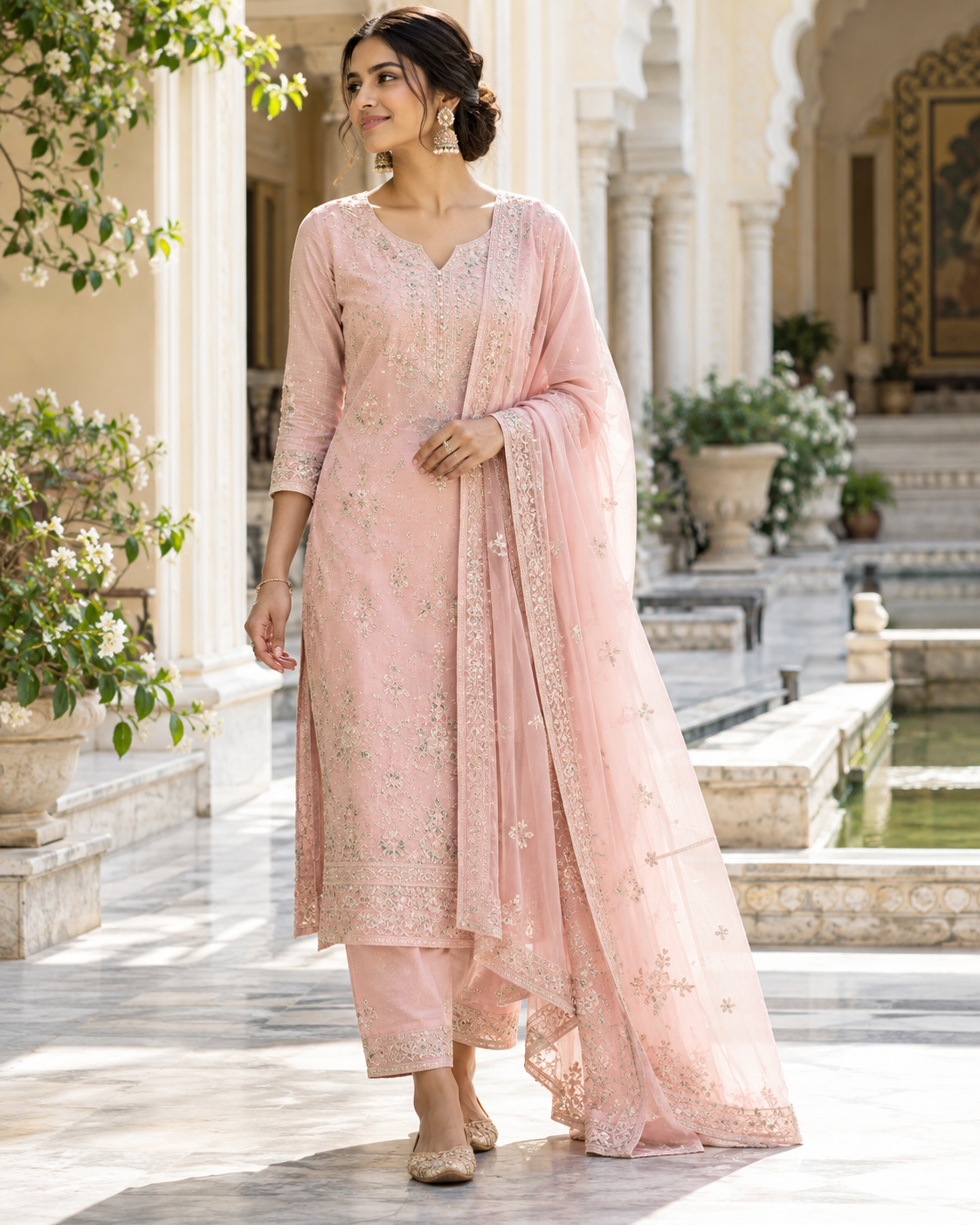
Kundan-inspired earrings and necklace sets suit sarees, lehengas, Anarkalis and embroidered salwar suits. A single statement necklace can carry an entire wedding guest look, while small Kundan-style studs are easier for festive dinners.
2. What Is Polki Jewellery?

Polki refers to natural diamonds used in their uncut or minimally cut form, rather than the uniformly brilliant-cut diamonds seen in many contemporary jewellery designs. Their shapes and light reflections can be less uniform, giving authentic Polki jewellery its distinctive traditional character.
How does Polki differ from a regular polished diamond?
Modern brilliant-cut diamonds are shaped with many precise facets to optimize sparkle. Polki diamonds retain more of their natural form; authentic stones can vary in shape, transparency and appearance. Polki jewellery is especially associated with heritage and bridal craftsmanship.
Is every clear stone in a Polki-looking necklace a real diamond?
Definitely not. White glass, crystal and other materials can create a similar look. Labels such as 'Polki-inspired' and 'uncut diamond look' should not be understood as guarantees that the jewellery contains natural diamonds. For a fine-jewellery purchase, ask for a detailed invoice, stone disclosure and independent documentation when appropriate.
3. What Is Jadau Jewellery?

Jadau describes a traditional approach to setting gemstones in jewellery, particularly associated with the jewellery traditions of Rajasthan and other North Indian centres. The work can involve highly detailed metalcraft, embedded stones and complementary enamel decoration.
What makes Jadau distinctive?
Jadau is principally about how the piece is constructed, not a specific gem or a single color. A traditional Jadau piece may incorporate Polki diamonds or colored stones, along with gold settings and Meenakari detailing on its reverse.
Why do shoppers confuse Jadau with Kundan and Polki?
Because a piece may genuinely feature all three. A retail description might highlight its Kundan-style setting, Jadau technique or Polki stones depending on the feature the seller wants to emphasize. Ask which term refers to the construction and which refers to the material.
4. What Is Meenakari Jewellery?

Meenakari is the art of decorating metal with colored enamel, often forming floral, geometric or nature-inspired patterns. Colors may include deep green, red, blue, pink, turquoise and ivory. Some pieces combine enamel details with gemstones, beads or pearls.
Why is Meenakari sometimes found on the back of jewellery?
In some traditional Indian designs, richly enameled patterns decorate the reverse of gemstone-set pieces. The reverse can be a work of art in its own right. Enamel may also appear prominently on the front of bangles, earrings and pendants.
Is all colorful painted jewellery genuine Meenakari?
No. Printed patterns, simple paint, resin and mass-produced enamel-like finishes can resemble traditional Meenakari work. A photograph cannot establish the process used. Authenticity requires reliable material and production information from the seller or maker.
Kundan vs Polki vs Jadau vs Meenakari: Quick Comparison
| Term | Primarily describes | Recognizable feature |
|---|---|---|
| Kundan | Traditional refined-gold stone setting | Stones closely framed by gold-toned settings |
| Polki | Uncut or minimally cut natural diamonds | Irregular, soft-reflecting diamond surfaces |
| Jadau | Stone-setting craftsmanship | Elaborate embedded gems and metalwork |
| Meenakari | Colored enamel decoration | Vibrant decorative patterns on metal |
Fine Jewellery vs Fashion Jewellery: What Should You Check?
Two necklaces can look very similar online while having completely different materials and prices. Traditional craftsmanship terms alone do not prove the purity or value of their components. Before you purchase, check the following:
- Metal: Is the piece solid gold, silver, plated metal or an unspecified alloy? Do not infer metal purity from its color.
- Stones: Are they natural diamonds, other genuine gemstones, glass, cubic zirconia or imitation stones?
- Finish: Is the colour produced by traditional enamel, plating, paint or another process?
- Weight and size: Review the dimensions and weight, particularly for heavy earrings or full bridal sets.
- Care: Ask whether the piece is sensitive to water, perfume, moisture or abrasive cleaning.
- Evidence: For costly fine-jewellery purchases, ask for relevant hallmarks, invoices and reliable independent gemstone reports where applicable.
How to Style These Jewellery Looks for Weddings and Diwali
With a richly embroidered saree: Try statement earrings and keep the necklace simple, especially when your blouse or pallu is detailed. With a plain silk or satin ensemble: A necklace inspired by Kundan or Jadau designs can add a strong focal point. With a colorful lehenga: Meenakari-inspired pieces can echo the outfit's accent colors. With a classic bridal outfit: Layered necklaces and matching earrings may create a traditional look, but check comfort and overall weight before the event.
One useful rule is to balance the visual complexity of the outfit with your jewellery. If both are heavily embellished, let one feature take the lead so your styling looks intentional rather than crowded.
How to Care for Traditional-Style Jewellery
Store each piece separately in a soft pouch or lined jewellery box, away from direct sunlight and high humidity. Put jewellery on after perfume, moisturizer and hairspray have dried. Wipe gently with a dry, soft cloth after wearing. Avoid soaking plated pieces, enamel or stones in water or harsh cleaning solutions; for valuable or antique pieces, consult a qualified jeweller before cleaning.
Frequently Asked Questions
Is Kundan jewellery the same as Polki?
No. Kundan is traditionally connected to stone setting, while Polki refers to uncut or minimally cut natural diamonds. A piece may combine the two.
Is Jadau a type of gemstone?
No. Jadau refers to jewellery-making craftsmanship and can feature different types of stones.
Can Meenakari jewellery include Kundan work?
Yes. Colorful enamel decoration and traditional gemstone setting can be used together on the same piece.
Does a Kundan-style necklace always contain real gold?
No. Many contemporary fashion-jewellery designs use plated base metals and imitation stones. Product-specific material disclosure matters more than the style name.
Which style is best for a wedding guest?
Choose based on the outfit and the event. Kundan-style earrings are versatile; colorful Meenakari-inspired accents complement bright ethnic wear; Jadau and Polki-inspired looks create a more ornate traditional impression. Comfort and verified materials matter, too.
Explore Jewellery and Festive Styling at Qivii
Understanding the language behind jewellery gives you a better sense of craftsmanship and helps you interpret product descriptions. Discover traditional-inspired accessories at Qivii's Kundan jewellery search, and pair your selection with festive outfits from Qivii's salwar suit collection.
Editorial note: Images in this guide are AI-generated illustrations of jewellery styles, not authenticated photographs of specific gemstones or products for sale. Material and craftsmanship claims must be verified for each actual item.


Leave a comment
This site is protected by hCaptcha and the hCaptcha Privacy Policy and Terms of Service apply.