
Men's Shoe Guide 2026: Loafers vs Derby Shoes vs Chelsea Boots
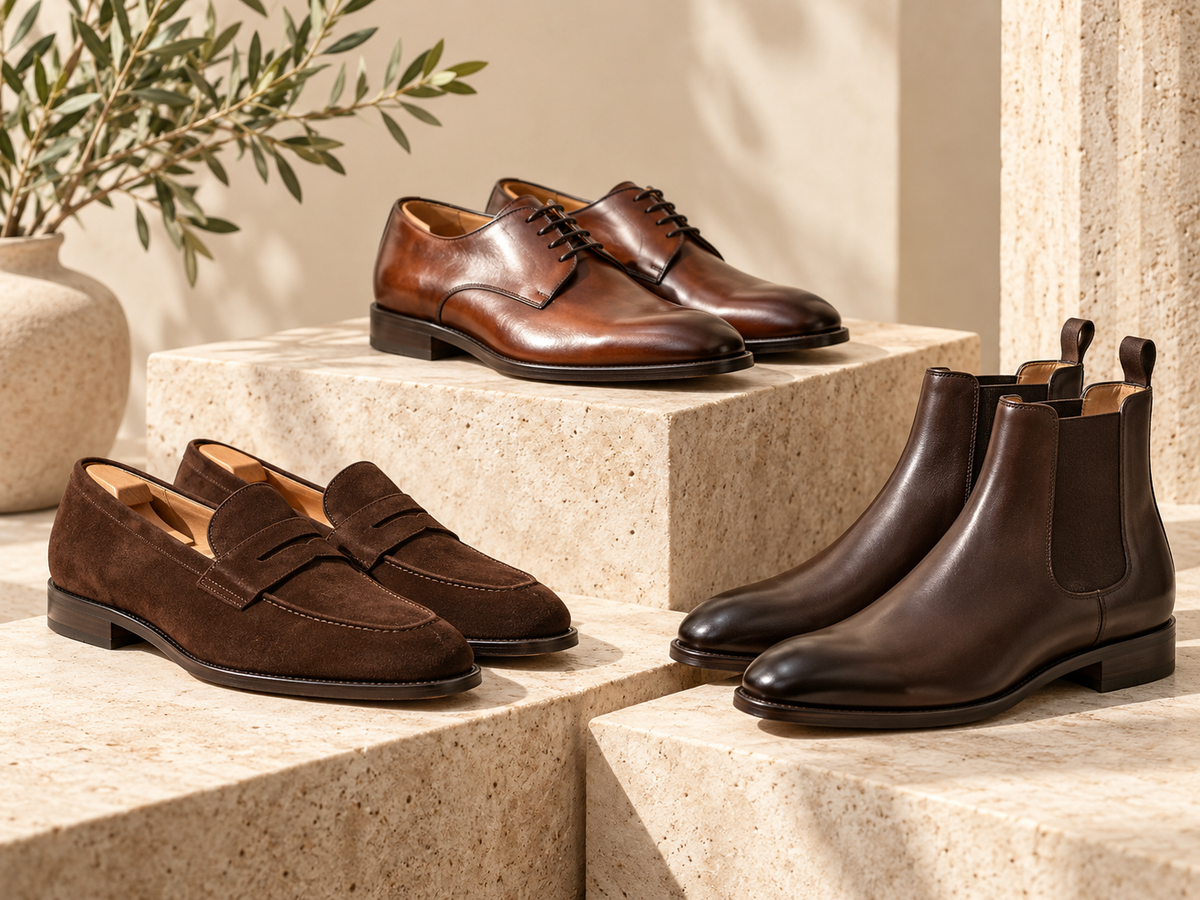
Loafers, Derby shoes and Chelsea boots are three of the most useful styles in a modern men's wardrobe. Yet choosing between them is not always straightforward: some suit relaxed weekends, others look sharp with tailoring, and certain boots bridge the two. This 2026 men's shoe guide explains the practical differences, how to wear each pair, what to check before buying and which one makes sense for your lifestyle.
Loafers vs Derby Shoes vs Chelsea Boots: At a Glance
| Style | Defining feature | Best for |
|---|---|---|
| Loafers | Slip-on, low-cut design | Smart casual, travel, warm weather |
| Derby shoes | Laces with an open-lacing construction | Office wear, suits, semi-formal events |
| Chelsea boots | Ankle-height slip-on boot with elastic sides | Smart casual, denim, cool-weather outfits |
These are general styling guidelines, not strict dress-code rules. A sleek leather loafer can be formal; a chunky Derby can look casual; and a refined Chelsea boot may work with tailoring.
1. Loafers: Effortless Smart-Casual Style

Loafers are slip-on shoes with a clean, streamlined shape. Penny loafers have a distinctive strap across the upper, while tassel and bit variations provide a different visual accent. The absence of laces makes them convenient for everyday wear, although heel fit is especially important.
What to Wear With Loafers
Pair brown suede loafers with beige chinos and a knitted polo for daytime outings. Dark leather loafers can complement navy trousers and a crisp shirt. With jeans, choose a tapered or straight fit with a neat hem that does not bunch over the shoe.
Best use: relaxed offices, dinners, travel days and smart-casual gatherings. If you are outdoors in wet weather, suede typically needs more protection and maintenance than some smooth-leather options.
2. Derby Shoes: Flexible Formal Footwear

Derby shoes are identified by their open-lacing design: the eyelet tabs sit on top of the vamp instead of being stitched beneath it as in an Oxford. This construction can offer more adjustment across the instep, though comfort still depends on the individual shoe's last, shape and size.
How to Style Derby Shoes
For business wear, choose a streamlined black or dark-brown Derby with tailored trousers. Brown Derbies also work beautifully with navy and grey suits, while more textured or thicker-soled styles can be worn with chinos and dark denim.
Best use: office wardrobes, formal meetings, wedding guest outfits and polished evening looks. Browse Qivii's men's formal and dress shoes for related styles.
3. Chelsea Boots: Streamlined Ankle Boots

Chelsea boots are ankle boots featuring elastic side panels and usually a pull tab at the back. Their clean lines make them especially easy to wear with jeans and tailored trousers. Smooth leather creates a sleeker finish; suede offers a softer, more relaxed appearance.
How to Style Chelsea Boots
Try dark-brown Chelsea boots with indigo denim, a neutral crewneck and a structured coat. For a dressier outfit, choose a slim, understated boot with tapered trousers. Avoid letting wide, excess fabric cover the entire boot shaft.
Best use: cooler seasons, casual evenings, sightseeing and smart-casual outfits. Not every Chelsea boot is weatherproof, so check upper materials, construction and sole traction before wearing them in rain or snow.
Which Shoe Style Matches Your Occasion?
- Business meetings: Derby shoes are a dependable first choice.
- Weekend lunch: Loafers pair naturally with chinos or tailored shorts when the setting allows.
- Date night: Chelsea boots with dark jeans make a refined combination; sleek loafers also work.
- Weddings: Choose polished dress shoes for traditional suits, considering the event's dress code.
- Indian or Indo-Western celebrations: Dark loafers may complement some kurta-and-jacket outfits, but formal ethnic footwear can be a better choice for certain looks.
- Daily commuting: Prioritise comfort, traction and weather suitability over the label of the style.
How to Choose the Right Size and Fit

Shoe sizing varies across manufacturers, so compare each product's size chart rather than assuming the same size will always fit. Measure both feet while standing and fit the larger foot. Try the shoes with the thickness of socks you will actually wear.
Five Checks Before Buying
- Toe room: Your toes should move naturally without hitting the front.
- Heel hold: A little initial movement can occur with some leather shoes, but excessive slipping is a warning sign.
- Width: Avoid strong pressure across the widest part of the foot.
- Instep: Laced shoes should secure comfortably without digging in; slip-ons should feel stable.
- Outsole: Consider surface grip, flexibility and the conditions in which you will walk.
Do not rely on painful shoes becoming comfortable simply because the leather softens. Shoes should feel reasonably comfortable from the start.
Leather, Suede and Synthetic Uppers: What Changes?
Smooth leather can provide a polished look and may be conditioned using products suitable for the finish. Suede has a soft, textured appearance but often needs a dedicated brush and appropriate protector. Synthetic materials can be lightweight or easy-care, although performance differs by product and construction. Always follow the maker's cleaning instructions.
Common Men's Footwear Mistakes
- Buying based solely on a product photo without checking the fit guide.
- Wearing shoes with the wrong trouser hem length.
- Using delicate suede in conditions for which it is not suitable.
- Choosing a slippery sole for wet or uneven surfaces.
- Assuming a more expensive shoe must be more comfortable.
- Ignoring care requirements and wearing the same pair continuously without adequate drying time.
FAQs About Men's Loafers, Derby Shoes and Chelsea Boots
Are loafers appropriate for the office?
Yes, in many business-casual workplaces. More formal offices may prefer lace-up dress shoes, so check the workplace dress code.
Can Derby shoes be worn with jeans?
Yes. Brown or more casually styled Derbies can work well with dark, clean denim and a fitted shirt or knitwear.
Are Chelsea boots formal?
They range from casual to dressy. A slim leather Chelsea boot can work with smart tailoring, but it may not suit occasions with a strict formal dress code.
Which is better for wide feet?
Fit depends on the specific brand and last. Derby lacing offers useful instep adjustability, but wide-foot comfort cannot be guaranteed by shoe category alone.
Which should I buy first?
For frequent office or formal wear, begin with a versatile Derby. For casual chinos and warm-weather outfits, consider loafers. If you mainly wear jeans and layers in cooler weather, Chelsea boots may get more use.
The Bottom Line
There is no single winner: the right shoe is the one that fits well, matches your actual wardrobe and performs in the conditions you encounter. Build around the occasions you dress for most often, then add another style when it brings genuine versatility. Explore men's casual shoes and dress shoes at Qivii for more ideas.


Leave a comment
This site is protected by hCaptcha and the hCaptcha Privacy Policy and Terms of Service apply.