
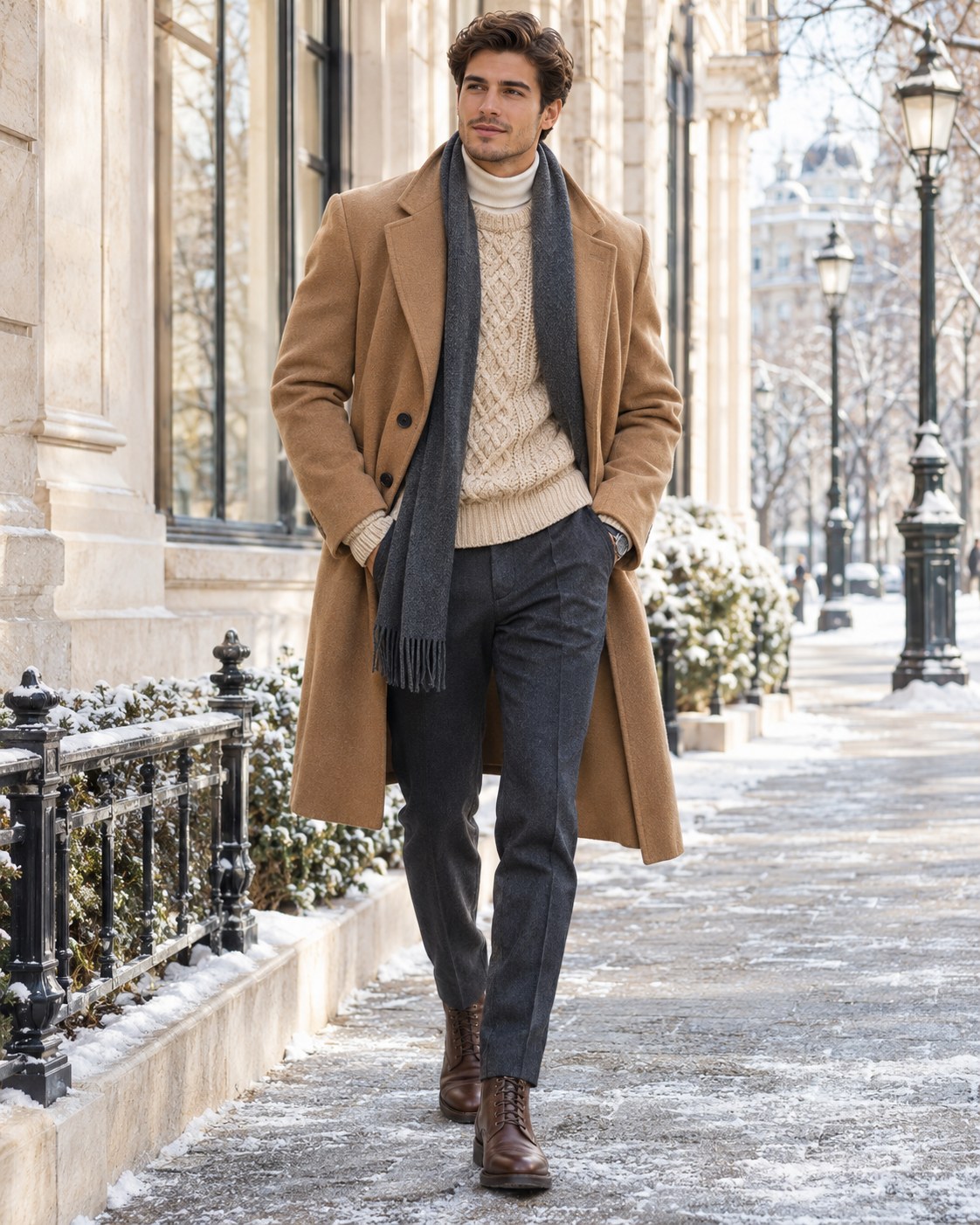
Men's Winter Layering Explained (2026): Base Layers, Mid-Layers & Outerwear for Cold Weather
Good winter dressing is about managing warmth, moisture and wind—not simply wearing the thickest jacket you own. A flexible three-layer approach helps you adjust when you move between chilly sidewalks, heated offices, cars and airports. This educational guide breaks down base layers, insulating mid-layers and protective outerwear so men can build practical outfits for the 2026–27 cold-weather season.
Think of winter layers as a system: the base layer manages sweat, the mid-layer retains warmth, and the outer layer helps block wind and precipitation. Depending on the temperature, activity and fabric, you may wear only one or two layers, or add more protection.

1. The base layer: what goes closest to your skin?

The base layer is the closest layer to your body. Its job is to move moisture away from the skin and remain comfortable beneath the rest of your clothing. When you expect to sweat—during a brisk walk, outdoor commute or winter activity—moisture management matters as much as insulation.
- Merino wool: Often comfortable across changing temperatures, with good moisture management and relatively low odor retention.
- Synthetic performance blends: Commonly quick drying, durable and useful for active days.
- Lightweight cotton: Comfortable in dry indoor settings, but less suitable next to skin for cold, sweaty outdoor activity because it retains moisture.
Fit tip: Choose a close, non-restrictive fit so shirts and sweaters slide over the base layer without bunching. In cold weather, consider thermal bottoms when the lower body needs additional warmth.
2. The mid-layer: where most of the warmth comes from

A mid-layer traps warmed air between fibers and underneath your coat. A fleece jacket, wool sweater, insulated vest or breathable knit can all serve this purpose. The amount of insulation you need depends on outdoor temperature, wind and your activity level.
- Wool knit: A polished option for everyday wear, meetings and casual outings.
- Fleece: Often lightweight and practical for movement or travel.
- Light insulated jacket or vest: Useful when a sweater is not enough, especially under a roomy outer shell.
Fit tip: Leave enough room to move your arms freely. A mid-layer compressed tightly under an undersized coat may offer less comfort and insulation than the same garment with a little breathing room.
3. The outer layer: protection against winter conditions

Your outer layer is the piece that faces the weather. Match it to the conditions, rather than selecting purely by appearance:
- Wool overcoat: Well suited to smart city outfits and many dry, cool days; performance depends on fabric weight, wind and temperature.
- Insulated puffer: A practical option for colder conditions when selected with appropriate insulation and weather protection.
- Wind- and waterproof shell: Valuable in rain, wet snow or strong wind, particularly over a warm mid-layer.
Not every puffer is waterproof, and not every wool coat is windproof. Check the garment's actual specifications and weather forecast. For extreme cold, prioritize suitable weather-rated gear and safety over a fashion silhouette.
4. Fabric guide: wool vs fleece vs cotton vs polyester
| Fabric | Common strength | Consideration |
|---|---|---|
| Wool / Merino | Insulating; can manage moisture well | Care and comfort vary by blend |
| Fleece | Lightweight insulating mid-layer | May need a wind-blocking outer layer |
| Cotton | Comfortable casual indoor wear | Holds moisture when wet |
| Polyester performance knit | Commonly durable and quick drying | Breathability and feel depend on construction |
5. How many layers should you wear?
There is no universal rule based only on a temperature number: wind, rain, sun, humidity, duration outdoors and how fast you move all affect comfort. Use these scenarios as a starting point:
- Mild, dry winter: Shirt or base layer plus sweater; carry a light coat if needed.
- Cool, windy commute: Base layer, insulating sweater and wind-resistant outer layer.
- Cold outdoor day: Moisture-managing base, warmer mid-layer, insulated or weather-protective coat, plus appropriate hat, gloves and footwear.
- Wet or snowy conditions: Prefer a protective shell and footwear suited to precipitation and slippery surfaces.
Remove or unzip a layer before you overheat, especially while walking. Damp clothing can make you colder once you stop moving.
6. Winter layering for office and business-casual outfits

Layering for work is about a cleaner silhouette and easy adjustment indoors. Try a crisp collared shirt under a fine-gauge knit and tailored blazer. On very cold days, add an overcoat for the commute, then remove it once inside. Neutrals such as navy, charcoal, stone and cream are easy to combine; using varying textures adds interest without busy patterns.
Keep it streamlined: Start with thinner layers under a structured blazer. Choose enough room through the shoulders and chest so the outfit does not pull when seated or reaching.
7. Practical winter layering for travel

Airports, trains and cars can be warm even when the destination is freezing. Choose pieces that are easy to remove and carry: a comfortable base, a zip-neck knit or light fleece, plus a coat and a scarf. Keep the heaviest outerwear accessible rather than buried in a bag if you'll need it soon after arrival.
A travel-ready outfit can balance warmth with mobility; breathable inner layers and easy-access zippers prevent the uncomfortable switch from overheated terminals to cold streets.
8. Five mistakes that make winter layering less effective
- Starting with a damp, sweat-retaining base: In active cold conditions, choose a moisture-managing material.
- Relying on one thick layer: Several adjustable layers can be more adaptable as conditions change.
- Compressing everything under a tight coat: Insulating pieces need comfortable fit and space to move.
- Ignoring wind and rain: Insulation alone may not provide adequate weather protection.
- Keeping every layer on indoors: Overheating and sweating can make the return outdoors uncomfortable.
Frequently asked questions
What are the three main clothing layers for winter?
A base layer next to the skin, an insulating mid-layer and an outer layer that helps protect from wind or precipitation.
Is a wool sweater a base layer or a mid-layer?
A bulky wool sweater is usually a mid-layer. Thin, close-fitting merino tops are often used as base layers.
Should I wear cotton as a winter base layer?
Cotton can be comfortable in dry, low-activity environments, but it is generally not ideal for extended cold outdoor activity where sweat or wetness is likely.
Do I need a puffer jacket in every winter climate?
No. A suitable outer layer depends on local conditions. A wool coat may work for dry mild winter weather, while a properly insulated jacket or protective shell may be more appropriate in harsher conditions.
How can men stay warm without looking bulky?
Begin with a thin well-fitted base layer, choose an efficient mid-layer, and wear outerwear that fits comfortably over both. Avoid unnecessarily stacking several heavy sweaters.
Can I wear a blazer as my winter outer layer?
A blazer can work in milder temperatures or indoors, but it usually does not replace a weather-protective coat in wind, rain or prolonged cold.
Final takeaway
The best men's winter layering system is one you can adjust. Choose a comfortable base, enough insulation for your activity and weather-appropriate outer protection. Once those essentials are covered, explore color, texture and silhouette to make the outfit your own.
For more men's western-wear styling inspiration, visit Qivii.


Leave a comment
This site is protected by hCaptcha and the hCaptcha Privacy Policy and Terms of Service apply.