
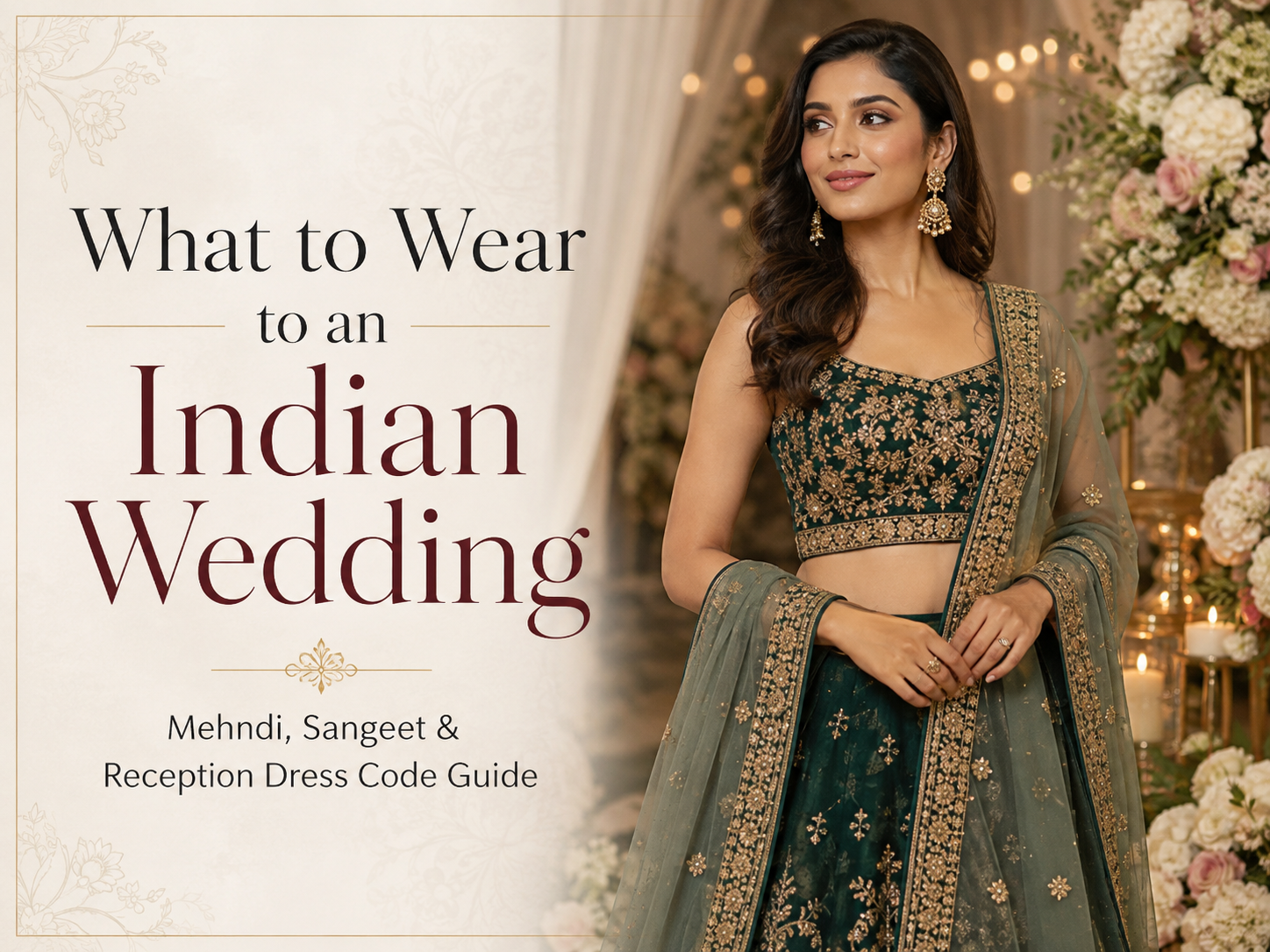
What to Wear to an Indian Wedding: Mehndi, Sangeet & Reception Dress Code Guide
An Indian wedding invitation can include several events, and each one can have a different mood. What feels perfect for a colorful daytime Mehndi may feel too casual for the wedding ceremony, while a heavily embellished reception look may be difficult to dance in at Sangeet.
If you are wondering what to wear to an Indian wedding, the easiest approach is to dress for the specific event, venue, level of formality and amount of movement involved. Customs vary widely by region, religion and family, so the invitation and the hosts should always take priority over general fashion rules.

Indian Wedding Dress Code: The Quick Guide
| Event | Best Mood | Easy Outfit Direction |
|---|---|---|
| Mehndi | Bright, playful, comfortable | Light lehenga, sharara or salwar suit |
| Sangeet | Glamorous and dance-ready | Lehenga, anarkali or festive co-ord |
| Wedding Ceremony | Traditional and polished | Saree, lehenga or elegant salwar suit |
| Reception | Refined evening glamour | Embellished saree, lehenga or formal suit |
1. What to Wear to a Mehndi
Mehndi is often one of the most colorful and relaxed celebrations of the wedding schedule. Bright yellows, greens, pinks, coral tones and floral details fit naturally into the mood, but comfort matters just as much as color.
If you expect to have henna applied, choose an outfit that leaves your hands and forearms easy to access and does not require constant adjustment. A lighter lehenga, sharara, kurta set or embroidered salwar suit can give you festive impact without making it difficult to sit, move or mingle.

Mehndi styling tips:
- Choose breathable-feeling silhouettes and manageable layers.
- Use playful color, floral jewellery or one strong accessory.
- Avoid a dupatta or sleeve detail that will constantly fall over fresh henna.
- Wear shoes you can comfortably stand and socialize in for several hours.
2. What to Wear to a Sangeet
Sangeet is where you can usually turn up the glamour, but the best outfit still needs to move with you. If dancing is part of the evening, a secure blouse, comfortable waistband and manageable hem are more useful than an outfit that looks impressive only while standing still.
A festive lehenga is a natural choice because it creates movement on the dance floor. An anarkali or polished matching set can work just as well if you prefer more coverage or simpler styling.

Sequins, metallic embroidery and jewel tones can suit an evening Sangeet beautifully. Keep the accessories balanced: if the outfit already has heavy surface detail, you may only need statement earrings and a compact bag.
For festive options, browse Qivii Designer Lehengas.
3. What to Wear to the Wedding Ceremony
The ceremony is usually the moment to lean most strongly into polished, traditional dressing. Sarees, lehengas and formal salwar suits can all be appropriate, depending on the family, venue and ceremony.

Embroidery, woven borders, rich color and elegant jewellery can all work, but the goal is to look celebratory without trying to compete with the bridal party. There is no single universal color rule across Indian weddings. Some families may prefer guests to avoid a bridal red or another ceremonial shade, while others may have no such preference. If the invitation does not make the dress code clear, ask the couple or family.
Religious venues can also have specific expectations around head covering, shoulders, footwear or modesty. Follow the hosts' instructions rather than assuming one rule applies to every ceremony.
Explore Designer Sarees for a traditional ceremony direction.
4. What to Wear to an Indian Wedding Reception
The reception often feels more like an evening party, so this is a good place for a darker palette, stronger embellishment and a more polished beauty look. Burgundy, navy, emerald, deep plum and metallic details can create evening impact while still feeling elegant.

An embellished saree, evening lehenga or formal salwar suit can all work. If the outfit has a lot of sparkle, simplify the necklace or bag. If the outfit is comparatively clean, use earrings, a clutch or one statement jewellery piece to create the evening finish.
5. Lehenga vs Saree vs Salwar Suit: Which Is Best?
There is no single winner. The right choice depends on how formal the event is, how much movement you need and which silhouette you can wear confidently for several hours.

Choose a lehenga when you want a festive statement
A lehenga works especially well for Sangeet, receptions and formal wedding celebrations. It gives you strong visual impact and, when the fit is comfortable, can allow good movement for dancing.
Choose a saree when you want timeless elegance
A saree is a beautiful choice for ceremonies and receptions. The main question is whether you feel confident managing the drape. If you are new to sarees, practice beforehand or consider a pre-draped style so you can focus on the event rather than constant adjustments.
Choose a salwar suit when comfort and mobility matter most
A salwar suit can be just as event-ready as a lehenga or saree when the fabric, embroidery and finish suit the occasion. It is particularly useful for long wedding days, travel, daytime functions and guests who want easier movement.
Browse Qivii Salwar Suits for more comfortable festive options.
6. What Should a Non-Indian Guest Wear?
Many Indian wedding hosts are happy for non-Indian guests to wear Indian clothing when it is done respectfully and fits the invitation. A lehenga, saree, kurta set or salwar suit can be a thoughtful way to participate in the celebration.
If you are unsure about how formal to dress, which colors have special significance or what a religious ceremony requires, ask the hosts. That is more reliable than trying to apply a generic rule to a family tradition you do not know.
7. How to Choose Jewellery, Bag and Footwear
A wedding guest look feels more polished when the accessories have a clear hierarchy. If you wear large earrings, you may not need an equally heavy necklace. If the neckline is already embroidered, let the earrings or bangles provide the focus.
For more guidance, see our guide to choosing earrings by neckline and occasion.
Keep the bag compact enough for the event but large enough for your phone, cards and small essentials. For footwear, consider the venue before heel height. Outdoor lawns, long ceremonies and dance-heavy evenings all call for different shoes. Some religious venues also require shoes to be removed, so follow the venue instructions.
8. Common Indian Wedding Guest Outfit Mistakes
- Ignoring the specific event: one outfit formula rarely works equally well for Mehndi, Sangeet and reception.
- Dressing like the bride: celebrate the occasion without deliberately recreating bridal styling.
- Choosing movement last: test whether you can sit, walk and dance comfortably before the event.
- Wearing new shoes for the first time: break them in before a long celebration.
- Over-accessorizing: choose one or two focal areas rather than making every detail compete.
- Assuming every Indian wedding follows the same customs: family and religious traditions vary significantly.
9. Packing for a Multi-Day Indian Wedding
If you are traveling for a wedding weekend, build your looks as a small capsule rather than packing unrelated accessories for every event. One evening clutch, a coordinated jewellery rotation and two or three pairs of footwear can work across several outfits.
- Pack the most delicate or heavily embellished outfit in a garment bag.
- Carry essential jewellery and one event outfit in hand luggage when flying if possible.
- Plan how garments will be steamed or pressed at the destination.
- Repeat neutral footwear or a clutch across events to reduce luggage.
- Keep safety pins, fashion tape and a small sewing kit for last-minute adjustments.
Frequently Asked Questions
What colors should I avoid at an Indian wedding?
There is no universal rule. Color meanings and family preferences vary. Some hosts may prefer guests not to wear a shade strongly associated with the bride or ceremony, while others do not mind. Check the invitation or ask the hosts when in doubt.
Can a non-Indian guest wear a lehenga or saree?
In many cases, yes. Indian attire is often welcomed when worn respectfully and appropriately for the event. Ask the couple if you are uncertain about the expected dress code.
What is best to wear for Mehndi?
Choose something bright, festive and easy to move in, such as a lighter lehenga, sharara or embroidered salwar suit. If you are having henna applied, make sure sleeves and dupatta placement will not interfere.
What is best to wear for Sangeet?
A dance-friendly lehenga, anarkali or festive set works well. Prioritize secure fit, manageable length and comfortable footwear because movement is often central to the evening.
Is a salwar suit formal enough for an Indian wedding?
Yes. A richly finished salwar suit can be completely appropriate for a wedding function. Formality depends on fabric, embroidery, styling and the event—not only the garment category.
Final Takeaway
The best answer to what to wear to an Indian wedding is to dress for the individual event rather than treating the entire wedding weekend as one dress code. Keep Mehndi bright and comfortable, make Sangeet dance-ready, choose polished traditional dressing for the ceremony and bring refined evening glamour to the reception.
Most importantly, respect the invitation and the family's customs. Once those are clear, choose the silhouette—lehenga, saree or salwar suit—that lets you celebrate comfortably and confidently.



Leave a comment
This site is protected by hCaptcha and the hCaptcha Privacy Policy and Terms of Service apply.