
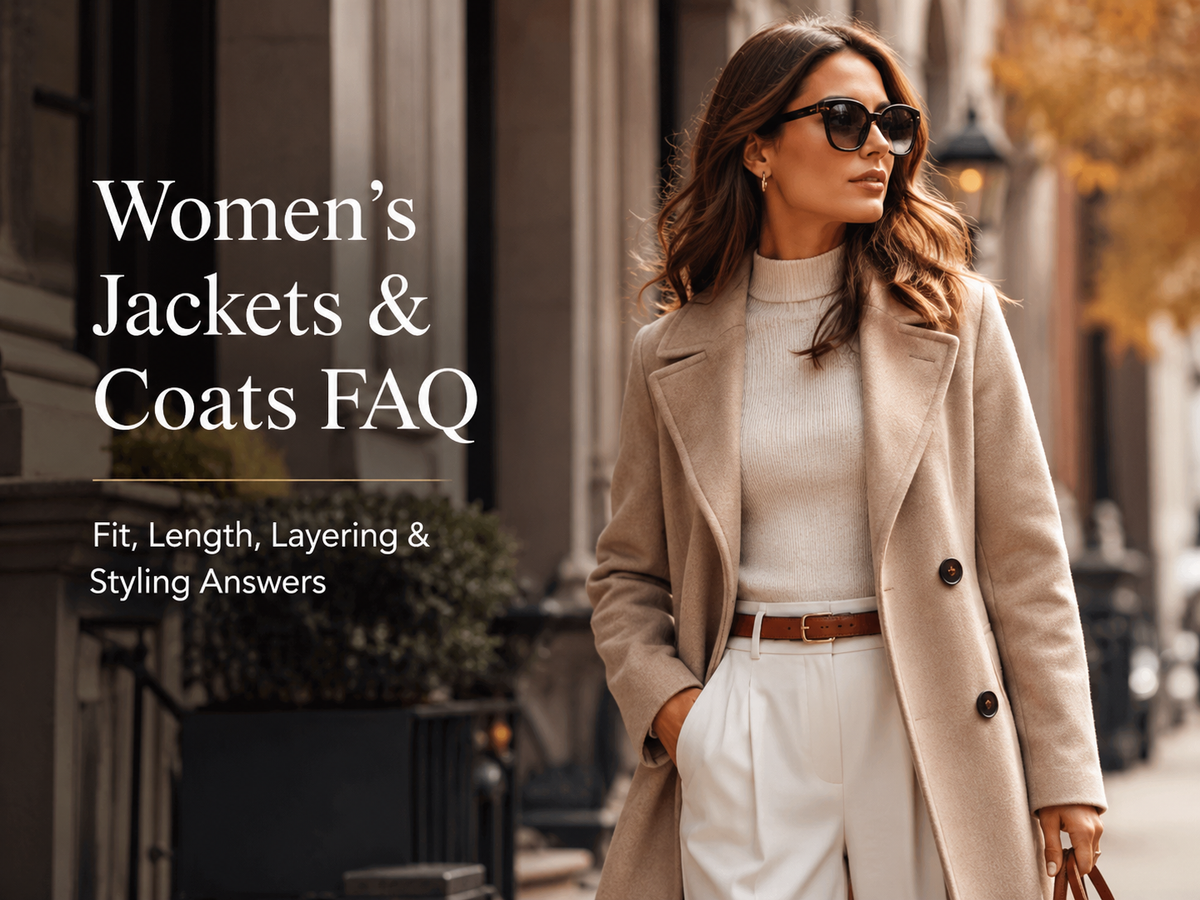
Women’s Jackets & Coats FAQ: 12 Questions About Fit, Length, Layering & Styling
Choosing a jacket or coat sounds simple until questions about fit, sleeve length, layering, proportion and color start piling up. This women’s jackets and coats FAQ answers the practical questions shoppers ask most, so you can choose outerwear that looks polished, feels comfortable and works with more of your wardrobe.
If you are browsing for a fresh layer, explore Qivii’s Women’s Western Jackets collection, then use the answers below to narrow down the silhouette, length and styling approach that suits you best.

1. How should a women’s jacket fit?
A good jacket should follow your shape without pulling, pinching or creating excess fabric. Start with the shoulders: the seam should sit close to the natural edge of your shoulder. The body should close comfortably over the type of top you normally wear underneath, while the sleeves should allow you to bend your arms without restriction.
For tailored blazers and structured jackets, a cleaner fit usually looks sharper. For casual, denim, bomber or oversized styles, extra ease can be intentional—but the garment should still look balanced rather than simply too large.

2. Where should the shoulder seams sit?
On a classic fitted jacket, the shoulder seam should end near the point where your shoulder naturally drops into your upper arm. If it sits far inward, the jacket may feel tight. If it extends well beyond your shoulder, the jacket can appear oversized unless that dropped-shoulder effect is part of the design.
Shoulder fit matters because it is one of the hardest areas to alter. When deciding between two sizes, prioritize a comfortable shoulder line first, then evaluate the waist and sleeve fit.
3. How long should jacket sleeves be?
For most tailored jackets, sleeves generally look balanced when they finish around the wrist bone. A slightly shorter sleeve can work on cropped or bracelet-sleeve designs, while winter coats may run a little longer for coverage. The key is to avoid sleeves that bunch heavily over the hands unless the styling is intentionally oversized.
4. Which coat length works best?
The best coat length depends on your outfit, proportions and how you plan to wear it. Cropped jackets work well with high-rise trousers, jeans and dresses where you want to define the waist. Hip-length jackets are versatile for everyday wear. Mid-thigh and knee-length coats offer more coverage and can create a streamlined line, while long coats make a stronger, more dramatic statement.

5. Does a long coat make you look shorter?
Not automatically. A long coat can actually create a continuous vertical line, especially when the outfit underneath has a similar color family or the coat is worn open. If you want to keep the proportions clean, choose a length that does not overwhelm your frame and pair it with trousers or footwear that maintain a longer visual line.
The more useful rule is proportion, not height. A coat should look intentional with the rest of your outfit rather than being chosen only according to a height-based rule.
6. Should you size up in a coat for layering?
Only if the coat is cut very close to the body or you routinely wear thick knits underneath. A well-designed coat often includes enough ease for normal layering. Try to judge the fit over the bulkiest layer you realistically expect to wear. You should be able to move your shoulders and arms comfortably without the front pulling.
Sizing up too far can create excess volume through the shoulders and sleeves, so it is better to check the garment’s intended silhouette rather than automatically adding a size.
7. What is better for work: a coat or a casual jacket?
For a polished office wardrobe, structured coats, tailored jackets and blazers are usually the easiest choices because they pair naturally with trousers, skirts and dresses. For a relaxed workplace or weekend wardrobe, denim, utility and casual jackets can feel more effortless.

If you want one layer to move between settings, choose a simple neutral jacket with clean hardware and minimal detailing. It can be dressed up with tailored separates or relaxed with denim and sneakers.
8. How do you layer a jacket or coat without looking bulky?
Build layers from lightest to heaviest. Start with a close-fitting base such as a fine-knit turtleneck, fitted tee or lightweight shirt. Add a thin cardigan or blazer only when needed, then finish with the outer layer. Keeping the inner layers relatively smooth prevents unnecessary volume around the shoulders and waist.

Another useful trick is to vary texture rather than thickness. A fine knit, crisp shirt and structured coat can feel visually rich without requiring several heavy layers.
9. What should you wear under a coat?
For everyday outfits, simple knitwear, long-sleeve tops, shirts and lightweight sweaters are dependable choices. A tailored coat can also sit over a dress or blazer for work and evening occasions. When temperatures fluctuate, choose removable layers so you can adjust throughout the day instead of relying on one very heavy combination.
10. Which coat colors are the most versatile?
Black, camel, cream and gray are among the easiest colors to repeat across different wardrobes because they combine well with denim, black trousers, neutrals and many accent colors. Navy and chocolate brown are also useful alternatives if you want something classic but slightly less expected.

If this is your first major outerwear purchase, start with a color that already appears frequently in your shoes, bags and trousers. That usually creates more outfit combinations than choosing a color simply because it is trending.
11. What is the difference between a jacket and a coat?
In everyday fashion language, jackets are generally shorter and often lighter, while coats tend to offer more coverage and may be designed for colder weather. The line is not absolute: longline jackets, shackets and lightweight coats can overlap. For shopping purposes, focus on length, fabric weight and intended use rather than the label alone.
12. What is the easiest first jacket or coat to buy?
Choose the gap in your wardrobe that appears most often. If you need a layer for office outfits, a neutral blazer or structured jacket may deliver the most wear. If you need everyday fall layering, a simple mid-weight jacket is practical. If cold-weather coverage is the priority, a streamlined mid-length or long coat in a versatile neutral is often a strong starting point.
For more seasonal inspiration, see our Fall 2026 Fashion Trend Report and our Fall Event Outfit Guide.
Quick Jacket & Coat Fit Checklist
- Shoulders sit cleanly without pulling or collapsing.
- Sleeves allow comfortable movement and finish at an intentional length.
- The front closes over your normal layers without strain.
- The overall length balances with the trousers, skirt or dress you wear most.
- You can lift and bend your arms comfortably.
- The color works with several items already in your wardrobe.
Final Takeaway
The best women’s jacket or coat is not simply the trendiest option. It is the one that fits your shoulders properly, works with your real layering needs, creates balanced proportions and complements the clothes you already wear. Use fit and function as the foundation, then choose the silhouette, length and color that make the piece feel personal.
Ready to compare styles? Browse Qivii Women’s Western Jackets for more outerwear options.

Leave a comment
This site is protected by hCaptcha and the hCaptcha Privacy Policy and Terms of Service apply.