
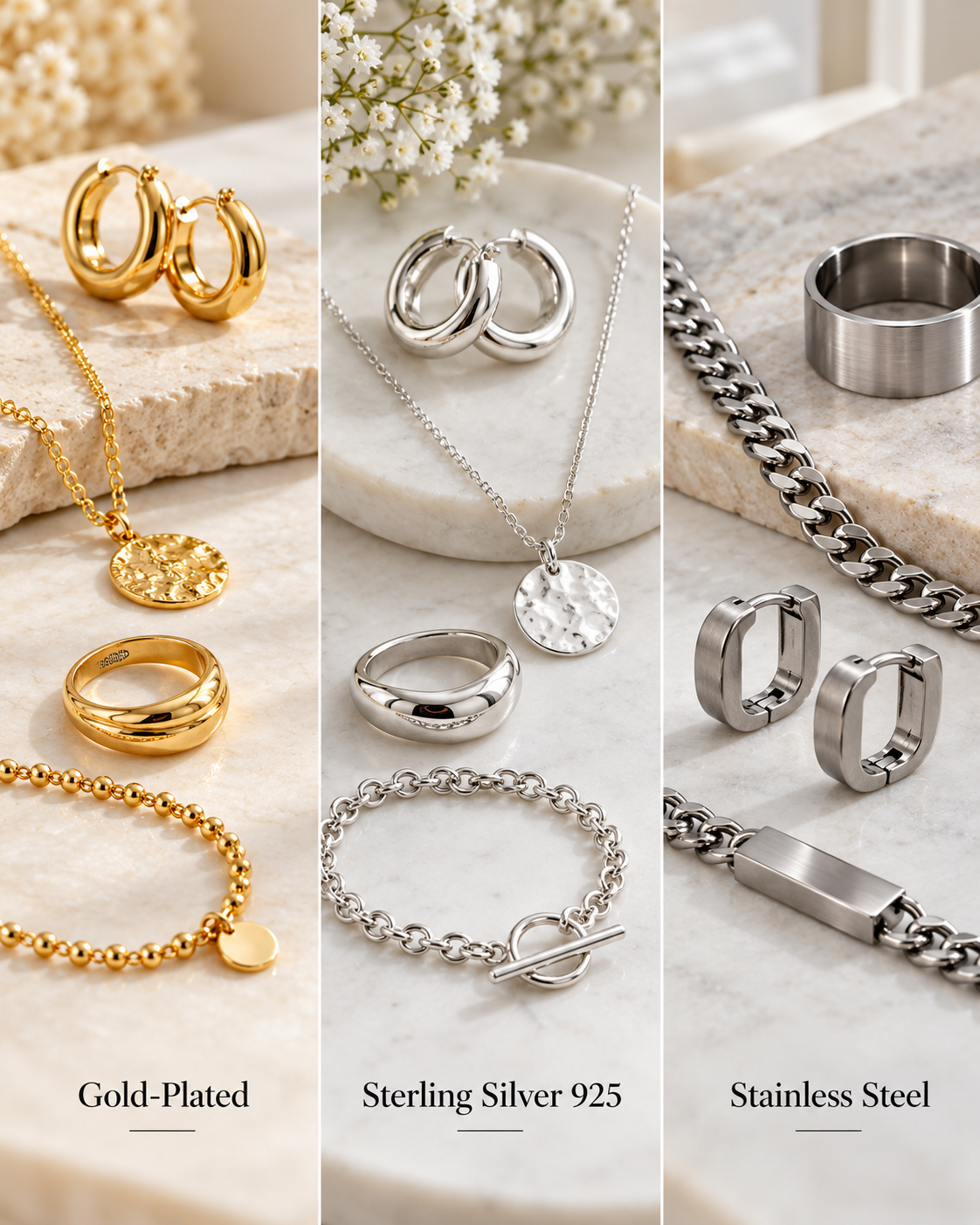
Gold-Plated vs Sterling Silver vs Stainless Steel Jewellery: Complete Buying Guide
Gold-plated, sterling silver and stainless steel jewellery can look surprisingly similar in product photographs, yet they differ in composition, upkeep and suitability for everyday wear. This practical jewellery materials guide explains what the terms mean, how vermeil fits into the picture, and which questions to ask before buying.
The photos below are editorial illustrations, not laboratory evidence of a specific product's metal content or coating thickness. Always verify each item's published specifications.
In this guide
- 1. What Is Gold-Plated Jewellery?
- 2. What Does Sterling Silver 925 Mean?
- 3. What Is Stainless Steel Jewellery?
- 4. Gold Vermeil vs Regular Gold Plating
- 5. Which Materials Are Better for Sensitive Skin?
- 6. How to Clean and Store Jewellery Properly
- 7. Side-by-Side Buying Checklist
1. What Is Gold-Plated Jewellery?

Gold-plated jewellery has a layer of real gold deposited over another metal. The underlying metal may be brass, copper, silver or a different alloy, depending on the product. The amount of gold at the surface does not make the entire piece solid gold. A good listing should identify the base metal, plating description and, when available, the thickness of the gold layer.
Wear resistance depends on the plating thickness, construction and how frequently the item meets friction, moisture, cosmetics and sweat. The coating can gradually wear, exposing the metal underneath. To compare pieces fairly, ask for the actual base metal and plating specification instead of judging the photograph or gold tone alone.
For occasional statement looks, gold-plated styles can offer an accessible way to achieve a warm gold finish. If you plan to wear the same piece daily, pay closer attention to the composition and care requirements.
2. What Does Sterling Silver 925 Mean?

Sterling silver is an alloy containing 92.5% silver by weight; the remainder is normally made up of other metals to improve workability and strength. A genuine 925 mark refers to the silver fineness of the underlying alloy, not the quality or identity of gemstones attached to it.
Sterling silver may tarnish when the surface reacts with sulfur-containing substances in the environment. Tarnish is not automatically proof that a piece is counterfeit. Suitable silver cleaning and dry storage can help maintain its appearance, although delicate finishes and stones may require specialist care.
Be aware that a photograph of a '925' stamp does not independently prove the metal content of a particular item. Check the merchant's material description, hallmarking information and seller credibility before purchase.
3. What Is Stainless Steel Jewellery?

Stainless steel is a family of iron-based alloys containing chromium. Its protective oxide layer helps resist corrosion, making many stainless steel designs practical for frequent use. Jewellery may have a silver-colored finish or a decorative gold-colored coating, but the coating does not change the underlying material.
Grades vary, and stainless steel is not the same as sterling silver. Some alloys contain nickel, so a generic 'stainless steel' label does not guarantee that a piece will be suitable for everyone with metal sensitivities. Ask for a specific grade and nickel-release information when those properties are important.
If you want straightforward daily accessories, stainless steel may be a reasonable option, especially if easy maintenance matters. Still check the actual finish, closures, coatings and seller's specifications.
4. Gold Vermeil vs Regular Gold Plating

Both gold vermeil and ordinary gold plating involve a gold layer over a different metal. In the United States, 'vermeil' has a more specific meaning: sterling silver must be the base metal, with a gold or gold-alloy coating meeting minimum fineness and thickness requirements. Under FTC jewellery guidance, that generally means gold of at least 10 karats and at least 2.5 microns of equivalent fine gold.
A product simply labeled 'gold-plated' may have a different underlying metal and a different coating thickness. However, the visual weight of a necklace or earring cannot tell you which treatment it received; heavy-looking pieces are not necessarily vermeil, and thin-looking pieces are not necessarily ordinary plating.
The illustration below compares the looks, not actual measured coating thickness. For a meaningful purchase decision, read the specific metal and plating disclosures. Do not assume that every item labeled vermeil will outlast every other plated item in all conditions.
5. Which Materials Are Better for Sensitive Skin?

Nickel is a common cause of allergic contact dermatitis. A metal's color, price or marketing category cannot by itself confirm whether it is safe for a particular person. Silver-colored pieces may be made from sterling silver, steel, plated alloys or other materials with very different compositions.
For sensitive ears or wrists, look for documented material specifications and nickel-release information where relevant. Titanium and other carefully specified materials are sometimes used for sensitive-skin jewellery, but the exact alloy and surface finish still matter. Even higher-quality products can cause reactions for some wearers.
If jewellery repeatedly causes itching, redness or swelling, stop wearing it and consult an appropriate healthcare professional. Do not rely on claims such as 'hypoallergenic' without understanding what the seller means by them.
6. How to Clean and Store Jewellery Properly

Start with the manufacturer's care instructions, because safe cleaning depends on the metal, surface coating, stones, adhesives and settings. A soft dry microfibre cloth and separate storage are generally safer first steps for many delicate pieces than an aggressive cleaning solution.
Avoid exposing plated jewellery to abrasive polishing compounds, harsh household cleaners and unnecessary soaking. Sterling silver may benefit from products formulated for silver, but treated gemstones and antiqued details can make such products unsuitable. Stainless steel often tolerates mild cleaning, though decorated or coated pieces need more caution.
After wearing, gently wipe away surface residue and place items in individual soft pouches or a partitioned jewellery box. Store dry and avoid friction between pieces. The pictured cleaning scene is illustrative; never use soapy water on a particular piece unless its maker permits it.
7. Side-by-Side Buying Checklist

Rather than selecting a material by color alone, compare the same facts for every product: the base metal, presence of plating, gold karat and coating thickness if supplied, silver fineness or steel grade, sensitivity information, closure construction, cleaning instructions and return or exchange terms.
Gold plating may be a fit for fashion versatility if you accept potential surface wear. Sterling silver offers a precious-metal alloy whose appearance can be maintained with appropriate care, although tarnish is possible. Stainless steel offers a durable everyday option in many designs, but its particular grade and finishes matter. None is universally the 'best' material.
The final photograph is a style comparison, not a metallurgical test. A seller's verified specifications should decide what the item is; a generated editorial image cannot establish its actual composition.
Quick jewellery material comparison
| Material | What it means | Care consideration |
|---|---|---|
| Gold-plated | Gold coating over another metal | Surface layer can wear with friction |
| Sterling silver 925 | 92.5% silver alloy | May tarnish; clean appropriately |
| Stainless steel | Chromium-containing steel alloy | Check grade and any colored coating |
| Gold vermeil | Qualifying gold coating on sterling-silver base | Verify specified fineness and thickness |
Frequently asked questions
Is 925 sterling silver real silver?
Yes, genuine sterling silver is 92.5% silver by weight. A 925 marking is an indication of claimed fineness, not standalone verification.
Does gold-plated jewellery contain real gold?
Gold plating uses a layer of gold on another material, but the underlying piece is not solid gold.
Is stainless steel waterproof?
Many grades resist corrosion well, but the exact alloy, construction and coatings determine how a specific piece tolerates moisture. Do not assume every item is unaffected by water.
Will sterling silver turn black?
It can tarnish and darken over time through environmental reactions. Proper care and storage help.
Which jewellery should I buy for daily wear?
Choose based on composition, skin sensitivity, maintenance, comfort and price rather than color alone. Daily wear can accelerate deterioration of some coatings.
Final takeaway
Ask what is under the surface. Verified metal descriptions, realistic care expectations and reliable seller information are more useful than shine alone. Browse Qivii's jewellery collection and check individual listings for the relevant material details.


Leave a comment
This site is protected by hCaptcha and the hCaptcha Privacy Policy and Terms of Service apply.