
How to Identify Good Quality Clothing Online: 7 Things to Check Before Buying
Buying clothing online should involve more than choosing a flattering photo. A few practical checks can help you assess fabric information, construction, fit and maintenance before spending money. This guide explains what to look for on a product page, what a photo can and cannot prove, and which questions are worth asking a retailer.
These checks apply to everyday dresses as well as occasionwear, sarees, lehengas and embroidered outfits. Use them as a checklist rather than a guarantee: construction quality cannot be conclusively verified from marketing images alone.
7-point online clothing quality checklist
- Read the Fabric Description, Not Just the Color
- Inspect the Stitching and Inside Finish
- Check Lining, Opacity and Comfort
- Understand Embroidery and Embellishment
- Compare Garment Measurements With Your Body
- Look Beyond the Hero Product Photograph
- Understand the Care Label Before Buying
1. Read the Fabric Description, Not Just the Color

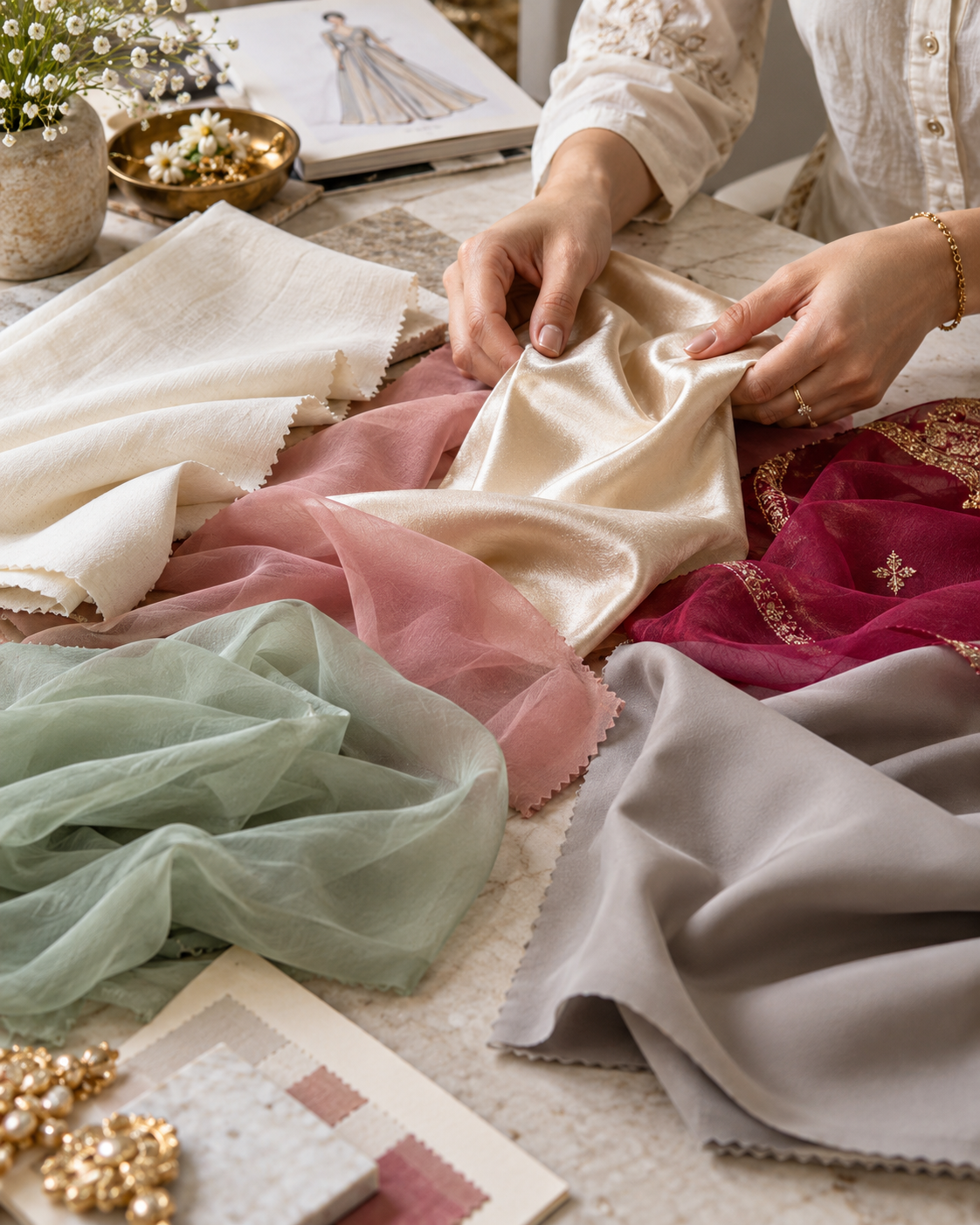
A beautiful photo cannot tell you everything about how a garment feels. Start with its stated fiber composition, weave, weight and whether the fabric is sheer, structured or stretchy. Cotton is often breathable, but the weave and finish still affect comfort. Silk can feel smooth and drape beautifully, although different silk fabrics behave differently. Georgette and chiffon are generally light and flowing; synthetic versions may have different breathability and care needs from natural-fiber options. Polyester can be durable and easy to maintain, yet its comfort varies with construction. Look for precise composition percentages rather than assuming a glossy fabric is silk or every soft fabric is cotton. Ask the retailer for missing fabric information before placing an occasionwear order.
2. Inspect the Stitching and Inside Finish

When close-up photos are available, examine the seams rather than judging only the overall silhouette. Evenly spaced stitches, secure seam endings and neatly finished edges are useful signals. Look around armholes, necklines, cuffs, zippers and hems, where construction challenges are more visible. An overlocked seam can be perfectly appropriate; quality depends on whether the finish suits the fabric and handles normal wear. Loose threads alone do not always indicate a weak garment, but unraveling, skipped stitches or puckering can be more concerning. Online shoppers should request a close-up or a short interior video when a premium piece does not show any construction details.
3. Check Lining, Opacity and Comfort

Lining can affect opacity, comfort, movement and the way a garment hangs. A sheer chiffon outer skirt may intentionally use an opaque inner layer; a breathable cotton outfit may be designed without a full lining. Neither choice is automatically better. Look for descriptions that identify which pieces are lined: blouse, skirt, bodice or sleeves. Check whether the lining is stitched in, detachable or included as a separate garment. For light-colored dresses, ask whether the fabric becomes transparent under daylight or flash. Pay particular attention to shoulder areas, waistbands and inner seams that might rub against the skin.
View dresses and festive wear →
4. Understand Embroidery and Embellishment

Printed motifs, machine embroidery, hand embroidery, sequins, beads and zari-like metallic threads can all produce attractive designs, but they are different techniques. Do not assume intricate-looking detail is handworked solely from a product photograph. Magnify close-ups to see thread density, bead attachment, pattern consistency and finishing on edges. Heavily embellished clothing also needs careful handling: raised elements may snag delicate scarves or bags. A higher price is not proof of superior workmanship, and a simpler design is not proof of lower quality. If technique matters to you, look for an explicit description or ask the seller what is used.
Explore finishing accessories →
5. Compare Garment Measurements With Your Body

A size label is only a starting point. Two dresses marked Medium can have different garment measurements and fit intentions. Measure your bust, natural waist, hips and the length that works for your height; then compare those measurements to the actual product chart. Ask whether the chart reports body dimensions or finished garment dimensions. Finished garments need ease for sitting, walking and breathing, particularly when the fabric has little stretch. For embellished blouses and tailored ethnic wear, also verify shoulder width, armhole, sleeve length and closure placement. For made-to-order or stitched pieces, double-check submitted measurements and customization instructions before ordering.
6. Look Beyond the Hero Product Photograph

A persuasive front-facing image can hide details you need to make a confident decision. Seek front, back and side views, then enlarge pictures of the neckline, sleeves, closures, hem and material texture. Look for consistency between the product title, written description and photographed details. Studio lighting and screen settings can change apparent color, so confirm shade descriptions when an exact event color matters. If an item is shown with a belt, dupatta, jewelry or bag, read the included-items list: styling props are not always part of the purchase. A video of normal walking or movement can help reveal drape and volume, though it is not a guarantee of fit.
7. Understand the Care Label Before Buying

Consider maintenance cost as part of clothing quality. A garment that needs specialist cleaning may be a poor everyday choice even if it is beautifully made. Read the listed fiber content and care directions, paying attention to washing temperatures, drying, ironing and professional-cleaning symbols. Embellished or heavily dyed garments may require gentler handling than plain basics. Never treat a generated image of a label as proof of the instructions for a real product. When care details are absent, ask the retailer for the manufacturer's directions and follow the label attached to the item you receive.
Quick questions to ask before checkout
- What is the actual fabric composition, and is the item lined?
- What comes in the package, including any matching pieces?
- Does the size chart show body or garment measurements?
- Are close-up photos available for important details?
- What cleaning method is recommended?
- What delivery estimate and exchange conditions apply to this item?
For made-to-order occasionwear, check the estimated delivery window and the policies for customized or stitched garments before placing an order. If you need the outfit for a particular function, allow time for possible shipping and customs delays.
Frequently asked questions
Can you tell whether clothing is high quality from photos?
Photos reveal some visible features, but they cannot reliably establish fiber content, durability, seam strength or how the garment feels. Combine pictures with specific product information and retailer answers.
Does heavier fabric always mean better quality?
No. Weight must suit the garment's purpose: a light, well-made summer fabric can be more appropriate than a heavy one. Weave, fiber, finishing and construction all matter.
Is hand embroidery always better than machine embroidery?
No. Both can be attractive and well executed. Judge workmanship, attachment, finish and care requirements rather than treating the technique alone as a ranking.
How can I reduce online clothing sizing mistakes?
Measure yourself, verify whether the chart gives body or finished-garment measurements, account for stretch and ease, and confirm customized dimensions before ordering.
Final takeaway
Look for clear material information, useful detail views, sound construction signals, realistic measurements and care guidance. When essential details are missing, ask before you buy. An informed purchase begins with questions the product page can actually answer.


Leave a comment
This site is protected by hCaptcha and the hCaptcha Privacy Policy and Terms of Service apply.