
How to Choose the Right Handbag Size for Everyday Use
The right handbag is not simply the one that looks best on a shelf. It should hold what you actually use, feel comfortable during the day, and suit the places you go most often. Choosing a bag that is too small can turn everyday essentials into a puzzle, while an oversized bag can encourage unnecessary weight.
This handbag size guide gives you a simple way to choose between mini bags, crossbody bags, shoulder bags and totes without relying on trends alone.
Start With What You Carry Every Day
Before comparing bag dimensions, place your normal essentials on a table. For many people that means a phone, wallet, keys, sunglasses and a few personal-care items. Workdays may add a charger, notebook, water bottle or tablet.
The useful question is not “What is the biggest bag I can carry?” but “What is the smallest comfortable bag that fits my real routine?” Leaving a little unused space also makes items easier to find.
Handbag Sizes at a Glance
| Bag size | Best for | Typical everyday load |
|---|---|---|
| Mini | Events, quick outings, light carry | Phone, cards, keys, lipstick |
| Small | Errands, casual days, dining | Phone, small wallet, keys, sunglasses |
| Medium | Most everyday routines | Daily essentials plus charger and small extras |
| Large / Tote | Work, commuting, longer days | Essentials, bottle, notebook, tablet or compact laptop depending on dimensions |
These are practical categories rather than universal measurements. Always compare a product's listed dimensions with the largest item you need to carry.
When a Mini or Small Bag Makes Sense
A compact bag works well when mobility matters more than capacity. It can be ideal for dinner, a wedding event, a short shopping trip or any occasion where you only need the basics.
If you regularly carry very little, explore phone crossbody and mini bags. The advantage is intentional packing: there is less room for items that add weight but rarely get used.
Why Medium Bags Are the Everyday Sweet Spot
For many routines, a medium handbag offers the best balance. It can hold essentials without feeling like luggage and is usually easier to move between work, errands and casual plans.
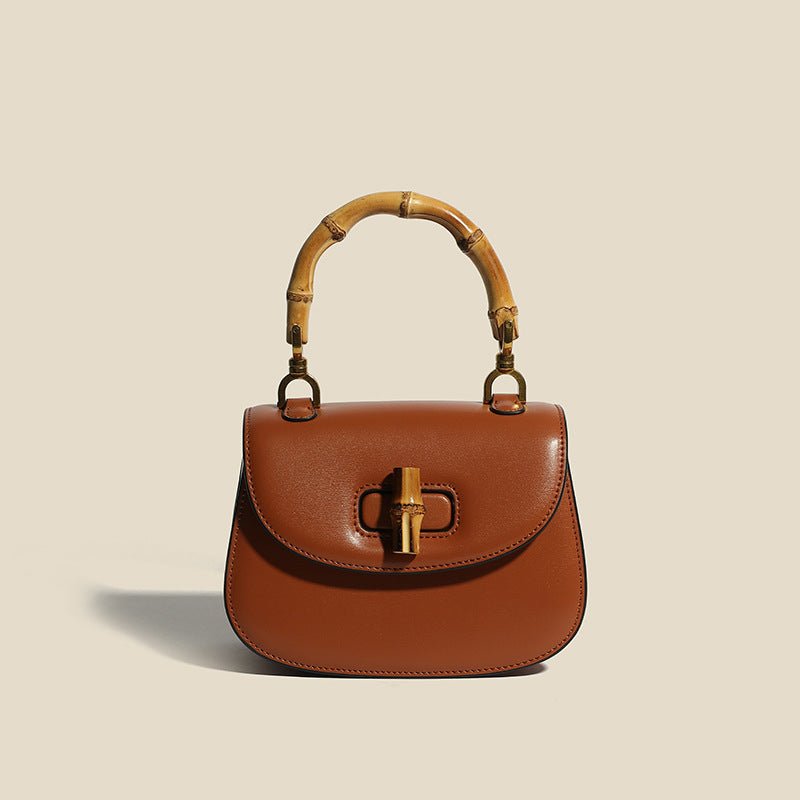
A structured top-handle design such as the Valentina Leather Bamboo Handbag shows why shape matters as much as capacity. A defined base and organized silhouette can make a moderate-size bag easier to use than a soft bag where everything falls to the bottom.
Choose a Tote When Your Day Requires More
A tote becomes useful when you routinely carry larger objects. Commuters may need room for a notebook, charger, water bottle and an additional layer. Parents and frequent travelers may also benefit from extra capacity.
Browse tote bags when capacity is the priority, but check the dimensions rather than assuming every tote fits a laptop. Measure your device and compare its width, height and depth with the bag specifications before buying.
Crossbody vs Shoulder Bag: Capacity Is Only Half the Decision
Two bags with similar internal space can feel very different once worn. Crossbody bags distribute the load across the torso and can keep both hands free, making them practical for walking, sightseeing and busy errands. Crossbody bags are worth considering when hands-free comfort is important.
Shoulder bags are easy to take on and off and often transition naturally from daytime to evening. If that matches your routine, compare options in shoulder bags.
Match the Bag to Your Body and Comfort
There is no handbag size that a particular body type must wear. Proportion can influence the visual effect, but comfort should come first. Pay attention to strap length, where the bag sits against your body, how wide the bag is, and how heavy it becomes when full.
If possible, recreate the expected weight at home before deciding that a large bag is right for daily use. A spacious bag is not useful if carrying it for several hours becomes uncomfortable.
Check These 6 Details Before Buying
- External dimensions: Confirm width, height and depth.
- Opening size: A bag may be wide at the base but narrow at the top.
- Strap drop: Check whether it sits comfortably on your shoulder or across your body.
- Closure: Zippers, flaps and open tops offer different levels of access and security.
- Interior organization: Pockets can make a medium bag more practical than a larger unstructured one.
- Empty weight: Heavy hardware and thick materials add to the load before you put anything inside.
A Simple Three-Step Handbag Test
Step 1: Identify the largest item you carry regularly. Step 2: add the smaller essentials you use most days. Step 3: choose a bag with enough room for those items plus a small amount of breathing space.
This approach is more reliable than buying a large bag “just in case.” If your needs vary dramatically, two purposeful sizes—a compact hands-free bag and a larger work or travel bag—can be more practical than forcing one handbag to do everything.
Frequently Asked Questions
What is the best handbag size for everyday use?
For many people, a medium bag is a practical starting point because it balances capacity and portability. The best size still depends on your actual daily essentials.
How do I know if a handbag will fit my laptop?
Measure the laptop's width, height and thickness, then compare those measurements with the bag's usable interior dimensions and opening. Do not rely on labels such as “large tote” alone.
Is a crossbody bag better than a shoulder bag?
Neither is universally better. Crossbody bags are useful for hands-free carrying and load distribution, while shoulder bags can be quicker to access and easier to move on and off.
Should I buy a bigger bag for travel?
Only if you genuinely need the capacity. For sightseeing, a smaller crossbody may be easier to manage; for transit days, a larger tote or travel and duffle bag may suit the extra items you need to keep nearby.
Choose for Your Routine, Not Just the Trend
A useful handbag should make your day easier. Start with what you carry, measure the largest essentials, consider how the bag will feel when loaded, and then choose the silhouette that suits your routine. You can compare different capacities across Qivii's women's bags collection once you know what size and carrying style you actually need.

Leave a comment
This site is protected by hCaptcha and the hCaptcha Privacy Policy and Terms of Service apply.