
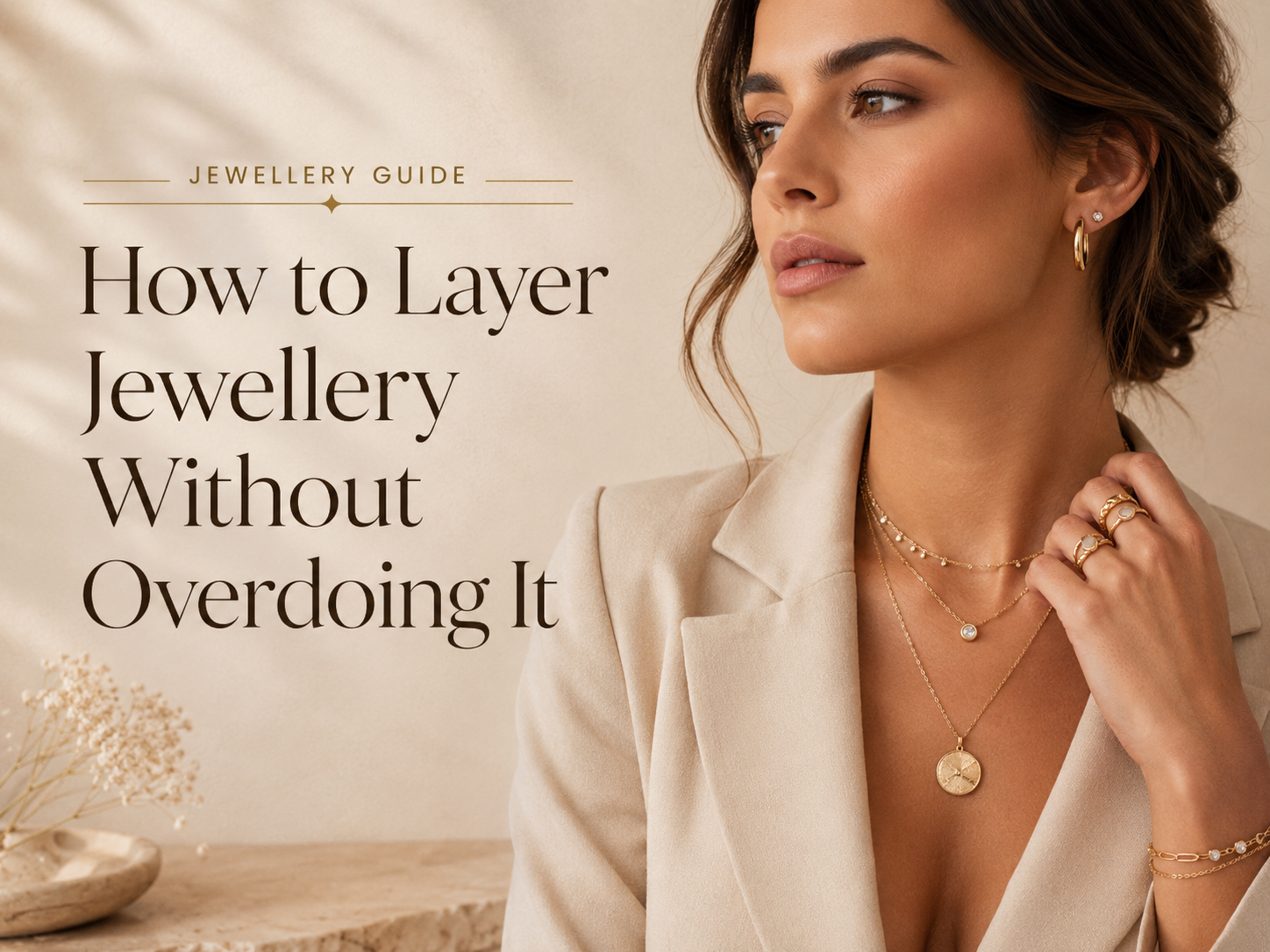
How to Layer Jewellery Without Overdoing It: 7 Easy Styling Rules
Layered jewellery can make a simple outfit feel finished, but the difference between intentional styling and visual clutter usually comes down to proportion, spacing and one clear focal point. You do not need a large jewellery box to create a polished layered look. A few well-chosen pieces can do more when each one has a purpose.
This guide explains how to layer jewellery in a way that feels balanced for everyday outfits, workwear, brunch, dinners and occasion looks. Use these seven easy rules as a starting point, then adjust them to suit your neckline, outfit and personal style.

1. Start With One Focal Piece
The easiest way to stop a layered jewellery look from becoming busy is to choose one piece that gets the most attention. It might be a pendant necklace, a sculptural chain, a pair of statement earrings or a bold bracelet. Once that hero piece is chosen, everything else should support it rather than compete with it.
If your focal point is a necklace, keep the other necklaces lighter and simpler. If you are wearing dramatic earrings, use a more restrained necklace stack. This creates hierarchy, so the eye knows where to look first.

2. Vary Necklace Lengths
Necklace layering works best when each chain has its own space. Instead of stacking several necklaces at almost the same length, build a gradual drop from short to long. For example, start with a delicate collar-length chain, add a small pendant below it, then finish with a longer necklace.
The exact measurements do not need to be perfect. What matters is visible separation. Leaving a little breathing room between each layer helps individual pieces stay readable and can also reduce tangling.
For a clean everyday stack, two necklaces are often enough. For a stronger fashion look, three can work well when the shapes and weights remain balanced.
3. Balance Earrings, Necklaces and Rings
A polished jewellery look is about the full picture, not just the neckline. If your necklaces are already layered, consider smaller hoops, studs or delicate drop earrings. If your earrings are the statement, simplify the neck area and let rings or a bracelet add detail farther away.
The same principle applies to rings. You can stack several slim rings, or wear one stronger ring with quieter pieces on the other hand. Avoid making every jewellery zone equally loud.
Shop Western Earrings | Shop Bracelets & Bangles

4. Mix Gold and Silver Intentionally
Mixing metals can make layered jewellery feel modern, but it looks strongest when the mix appears deliberate. Instead of adding one random silver piece to an otherwise all-gold look, repeat both metals in at least two places. For example, combine a gold chain with a silver chain, then echo the mix with stacked rings or bracelets.
Another easy method is to use one piece that already combines gold and silver as the bridge between the two finishes. Keep the rest of the styling simple so the mixed-metal effect feels cohesive rather than accidental.

5. Match Jewellery Scale to Your Neckline and Outfit
Your clothing changes how jewellery is perceived. A clean V-neck creates a natural frame for a pendant or graduated necklace stack. A crew neck can work with a shorter chain plus a longer pendant worn over the fabric. Strapless and open necklines give you more room for layered necklaces, while detailed collars or embellished outfits may need less jewellery.
Also consider the visual weight of the clothing. Minimal outfits can handle more jewellery detail. Heavily printed, embroidered or textured outfits often look better when the jewellery is edited down to one or two key areas.
6. Keep Space Between Your Layers
Layering does not mean filling every available inch. Empty space is part of the styling. When necklaces overlap too closely, pendants can hide each other and the look can become tangled. When bracelets are packed too tightly, individual shapes disappear.
Try mixing textures instead of simply adding quantity: a fine chain beside a flatter chain, a smooth bangle beside a delicate bracelet, or a simple band beside a textured ring. Variation in shape and surface creates interest without requiring too many pieces.
7. Use the One Quiet Zone Rule
Before leaving the house, look at the complete outfit and choose one area to keep intentionally quiet. If the neck, ears and wrists are all styled, keep the rings minimal. If you are stacking necklaces and rings, choose smaller earrings. If you are wearing large earrings and multiple bangles, skip the necklace.
This single rule is one of the easiest ways to make layered jewellery feel considered rather than overdone. It gives the outfit a visual pause and lets your strongest pieces stand out.
Easy Jewellery Layering Formulas
Everyday
Two delicate necklaces + small hoops or studs + one simple ring.
Work
Short chain + small pendant + understated earrings + watch or one bracelet.
Brunch
Two or three mixed-texture necklaces + medium hoops + a small ring stack.
Wedding or Festive Look
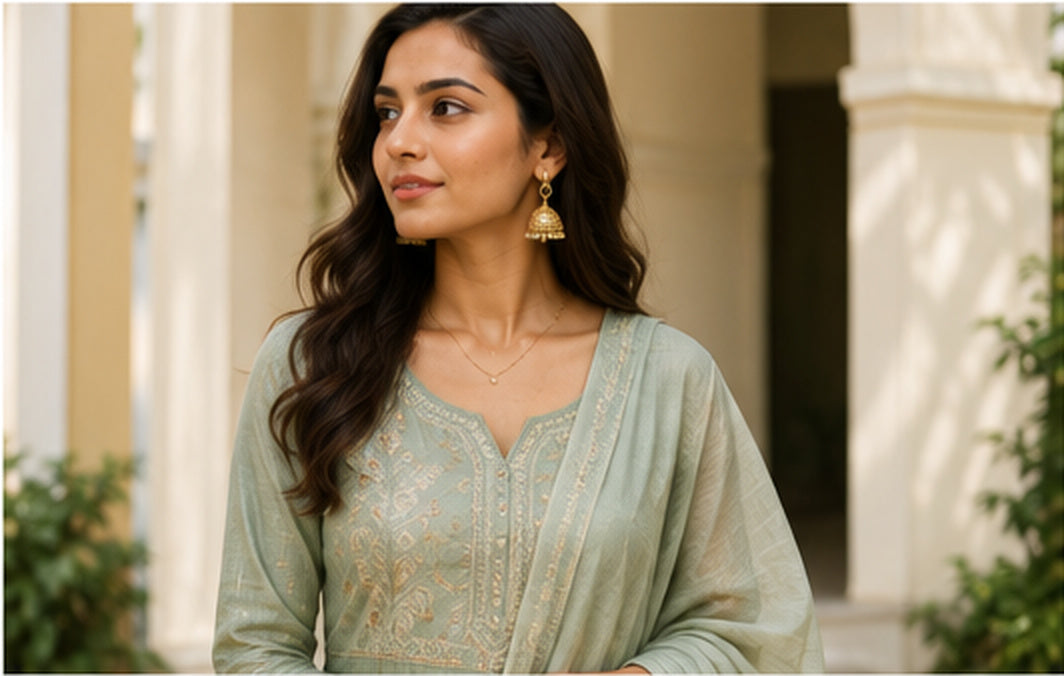
One statement focal piece + restrained supporting jewellery. If the necklace is ornate, simplify the earrings and wrist; if the earrings are dramatic, keep the neckline cleaner.
Common Jewellery Layering Mistakes
- Using several necklaces at almost the same length: they compete visually and can tangle more easily.
- Wearing too many statement pieces together: choose one clear hero piece and let the others support it.
- Filling every jewellery zone: leave at least one area quieter.
- Mixing wildly different scales: combine one stronger piece with finer supporting pieces.
- Ignoring the neckline: jewellery should work with the clothing rather than fight against it.

Frequently Asked Questions
How many necklaces should you layer at once?
Two or three necklaces are a practical starting point. The most important detail is that they have visibly different lengths and do not all carry equally large pendants.
Can you mix gold and silver jewellery?
Yes. Repeating both metals across the look usually makes the combination feel more intentional. A mixed-metal piece can also help connect the two finishes.
Can delicate and chunky jewellery be worn together?
Yes. In fact, contrast can make a layered look more interesting. Use the chunky piece as the focal point and keep the supporting pieces lighter.
How can you stop layered necklaces from looking tangled?
Use different chain lengths, vary pendant sizes and leave visible gaps between layers. Choosing chains with different weights and textures can also help them sit more distinctly.
Final Takeaway
Good jewellery layering is not about wearing as many pieces as possible. It is about creating a clear focal point, varying lengths and textures, balancing jewellery across the body and knowing when to stop. Start with fewer pieces, check the full outfit, and add only what improves the overall balance.
Ready to build your own combination? Explore Qivii Jewellery for necklaces, earrings, bracelets and more styling options.


Leave a comment
This site is protected by hCaptcha and the hCaptcha Privacy Policy and Terms of Service apply.