
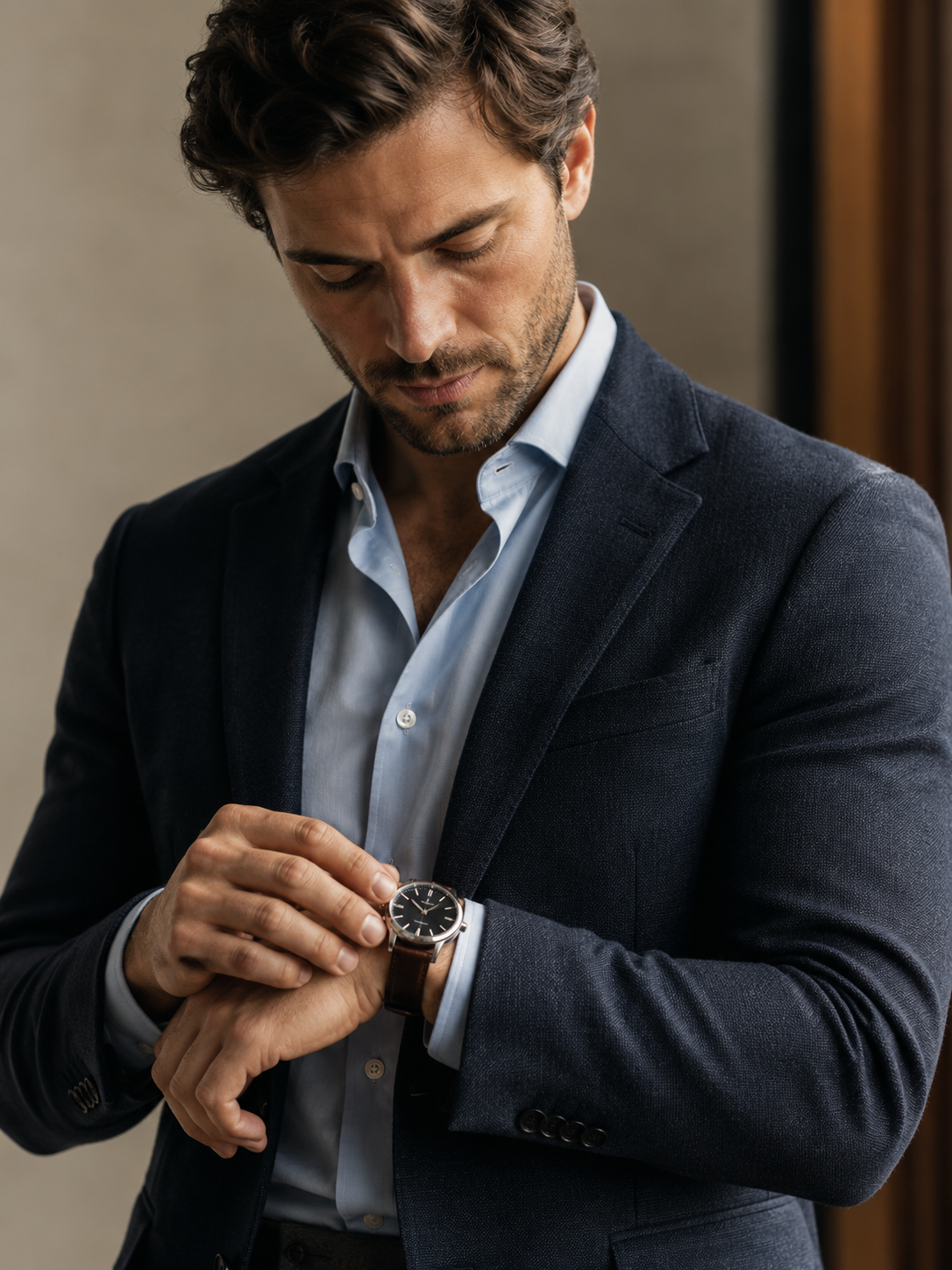
7 Watch Sizing Mistakes Men Make (and How to Choose the Right Watch Size)
A watch can be beautifully designed and still look wrong on the wrist if the proportions are off. The most common mistake is treating watch size as a single number. In reality, case diameter, lug-to-lug length, case thickness, wrist shape and strap fit all work together.
If you are trying to learn how to choose watch size, this guide gives you a practical way to judge fit without relying on rigid rules. Use the measurements as a starting point, then let comfort and proportion make the final decision.
Quick Watch Fit Checklist
- The lugs should sit comfortably within the top surface of your wrist rather than visibly overhang it.
- The case should feel balanced instead of dominating or disappearing on the wrist.
- The watch should stay in position without pinching your skin.
- Case thickness should work with the sleeves and clothing you wear most often.
- The strap or bracelet should visually balance the case.
- Your wrist shape matters just as much as wrist circumference.

Mistake 1: Choosing a Watch by Case Diameter Alone
Case diameter is the measurement shoppers notice first, but it cannot tell you the whole story. Two watches with the same stated diameter can wear very differently because of their bezel, dial opening, case shape, crown design and especially their lug geometry.
A better approach is to treat diameter as the first filter rather than the final answer. Once a case size looks reasonable, check the watch from the top and side. Does it sit naturally on your wrist? Does the case look centered? Do the lugs stay inside the visible wrist area? Those observations are more useful than chasing one supposedly perfect millimeter measurement.
Mistake 2: Ignoring Lug-to-Lug Length
Lug-to-lug is the distance from the tip of the upper lug to the tip of the lower lug. It has a major effect on how large a watch actually feels. A moderate-diameter watch with long, straight lugs can wear larger than expected, while a watch with short or downward-curving lugs may sit more compactly.
When possible, look for lug-to-lug measurements in the product specifications. If that information is not available, study the side and wrist photos. The safest visual cue is simple: the lugs should not appear to extend beyond the edges of the wrist.

Mistake 3: Assuming a Bigger Watch Always Looks More Masculine
Large watches can make a strong statement, but bigger does not automatically mean better or more masculine. A watch that overwhelms the wrist can make an otherwise polished outfit feel out of proportion.
Classic, sporty and statement watches are designed with different visual weights. A clean dress watch can look substantial even at a more restrained size because the dial is open and uncluttered. A chronograph with a thick bezel, pushers and multiple subdials can appear much larger at a similar diameter.
The comparison below is best used as a visual reference rather than a universal sizing chart. Watches across the 36–44 mm range can work for different wrists and styles depending on the rest of their proportions.

Mistake 4: Forgetting About Case Thickness
Thickness changes both comfort and appearance. A thicker case has more wrist presence and may suit a casual or sport-focused watch, but it can also catch on fitted shirt cuffs. A slimmer watch usually slides more easily under tailoring and often creates a more understated look.
Think about how you will actually wear the watch. If most of your wardrobe is office shirts, blazers and formalwear, sleeve clearance deserves extra attention. If the watch is mainly for weekends or casual outfits, a thicker case may be perfectly comfortable.
Mistake 5: Ignoring Strap and Bracelet Proportion
The strap is part of the sizing equation. A very narrow strap on a visually heavy case can make the watch feel top-heavy, while an excessively wide bracelet can make a smaller watch appear bulky. Taper, material and color also affect perceived size.
Leather often creates a cleaner, dressier profile. Metal bracelets can add visual weight. Silicone and sport straps can make a watch feel more substantial and casual. There is no single correct material; the goal is for the strap and case to look intentionally designed as one unit.

Mistake 6: Wearing the Watch Too Tight or Too Loose
A correctly sized watch should feel secure without leaving deep pressure marks. If it slides constantly around the wrist or rotates underneath your arm, it is probably too loose. If the strap pinches, creates uncomfortable pressure or makes normal wrist movement difficult, it is too tight.
Bracelets may need links added or removed, while leather and fabric straps can usually be adjusted through existing holes. Because wrists can change slightly with temperature and activity, aim for a fit that has a small amount of natural movement without allowing the watch to flop around.
Mistake 7: Choosing Size Without Considering Where You Will Wear It
The best watch size is also influenced by purpose. A watch for tailored workwear may benefit from a restrained profile that sits neatly under a cuff. An everyday watch needs comfort for long periods. A sport-inspired or statement watch can carry more visual presence if that matches the outfit and occasion.
Instead of asking only, “What size watch should I buy?” ask, “Where will I wear it most?” That question often makes the right proportions much easier to identify.
How to Measure Your Wrist for a Watch
- Use a flexible measuring tape. Wrap it around the area where you normally wear your watch.
- Keep the tape comfortable. It should touch the skin without pulling tightly.
- No tape? Wrap a strip of paper or string around your wrist, mark the overlap, then measure it against a ruler.
- Look at wrist shape too. Two wrists with the same circumference can have different top-surface widths, which changes how a watch sits.
- Compare several dimensions. Check case diameter, lug-to-lug length and thickness instead of using circumference alone.
The Expert Watch Sizing Checklist
Before deciding on a watch, review these five areas together:
- Case diameter: Does the face look balanced on your wrist?
- Lug-to-lug: Do the lugs stay within the wrist rather than overhanging?
- Case thickness: Is it comfortable and practical with your usual sleeves?
- Strap or bracelet: Does its width and material complement the case?
- Overall wearability: Can you comfortably wear it for hours without constant adjustment?

Should You Follow a Wrist-Size Chart Exactly?
Watch-size charts can be useful for narrowing your search, but they should not be treated as strict rules. Design changes perceived size. Wrist width changes fit. Personal style changes what looks intentional. Even the same person may prefer a smaller dress watch and a larger sport watch.
Use charts to create a shortlist, then evaluate the complete watch. For example, Qivii's Z01 2D Lunar Edition lists a 40.5 mm case and an 8.8 mm thickness, which gives shoppers two useful dimensions rather than diameter alone.
Choosing a Watch Online: What to Check Before Ordering
When shopping online, look beyond the front-facing product image. Check specifications, wrist shots and side profiles whenever they are available. Compare the stated case size with a watch you already own and like. If you know the dimensions of a comfortable current watch, you have a much better reference point than a generic chart.
You can browse the Qivii Men's Watches collection to compare different dial shapes, case styles and strap designs. If you prefer a sportier chronograph look, the Lige GT6 Pro Men's Analog Watch is one example to compare visually. You can also read our Lige GT6 Pro style guide for outfit inspiration.
Final Takeaway
The right watch size is not the biggest case your wrist can hold, and it is not determined by circumference alone. The most reliable fit comes from looking at case diameter, lug-to-lug length, thickness, strap proportion, wrist shape and real-world comfort together.
A well-proportioned watch should feel natural on the wrist, work with your wardrobe and look intentional from every angle. Avoid these seven sizing mistakes and you will have a much stronger foundation for choosing a watch you will actually enjoy wearing.


Leave a comment
This site is protected by hCaptcha and the hCaptcha Privacy Policy and Terms of Service apply.